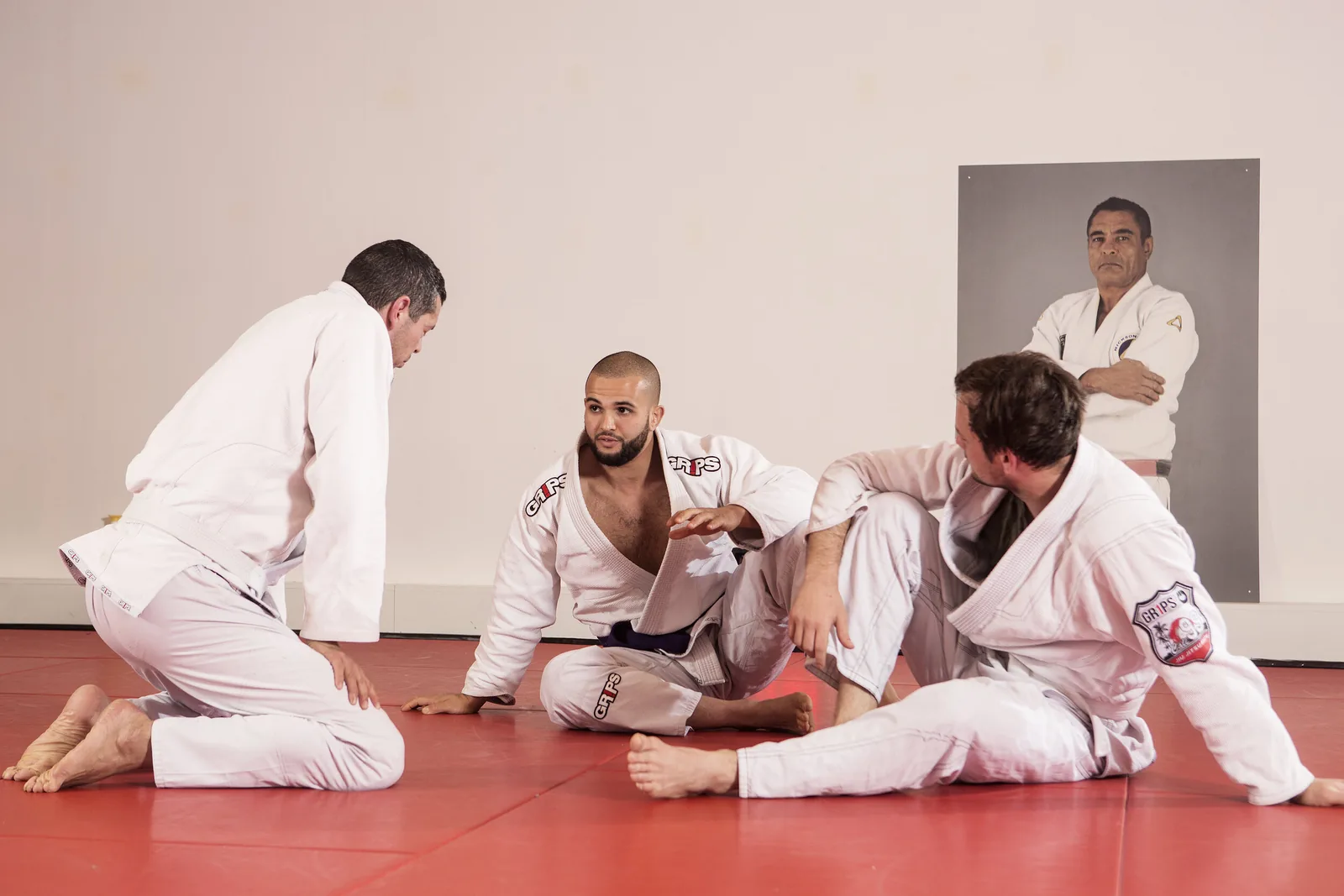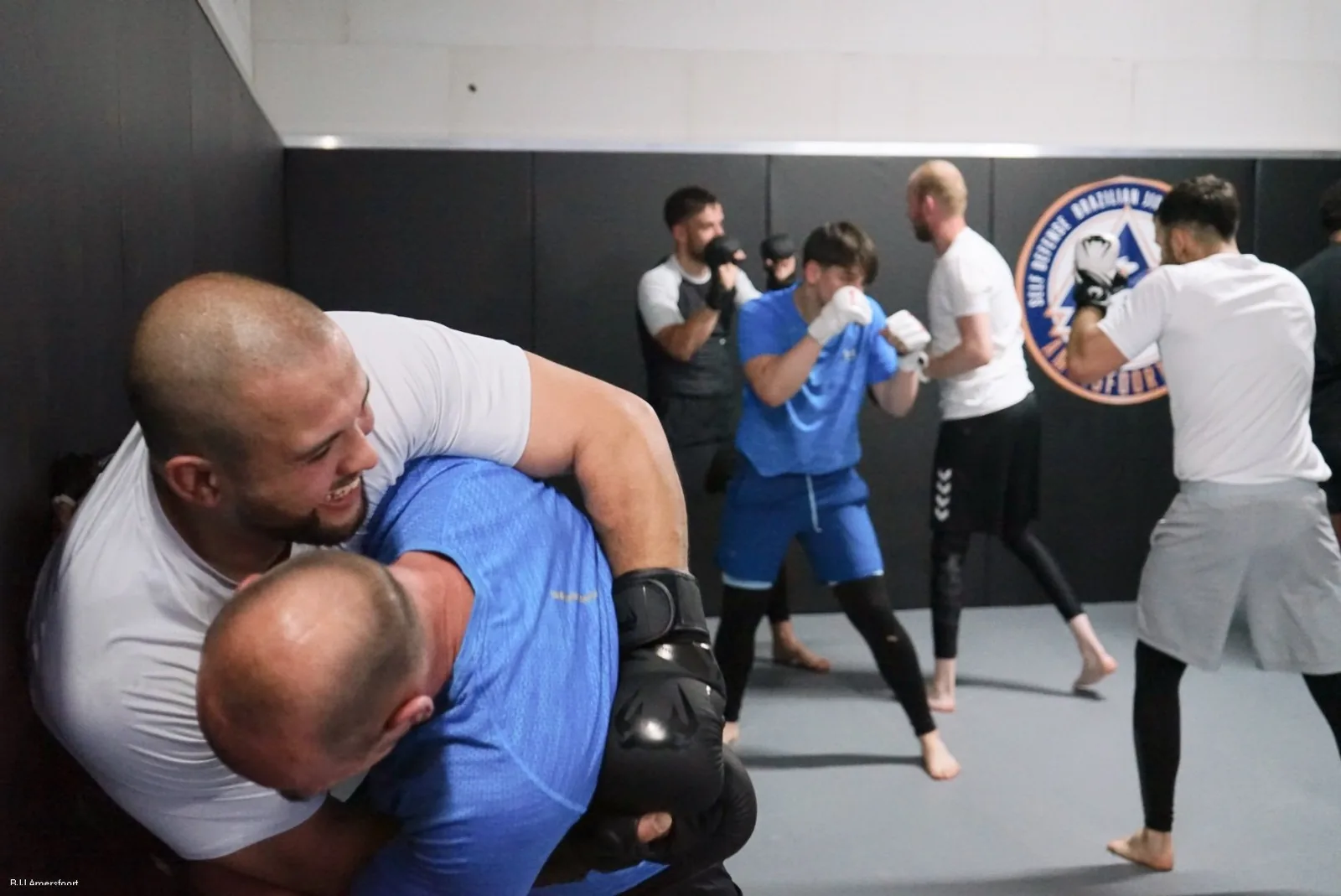
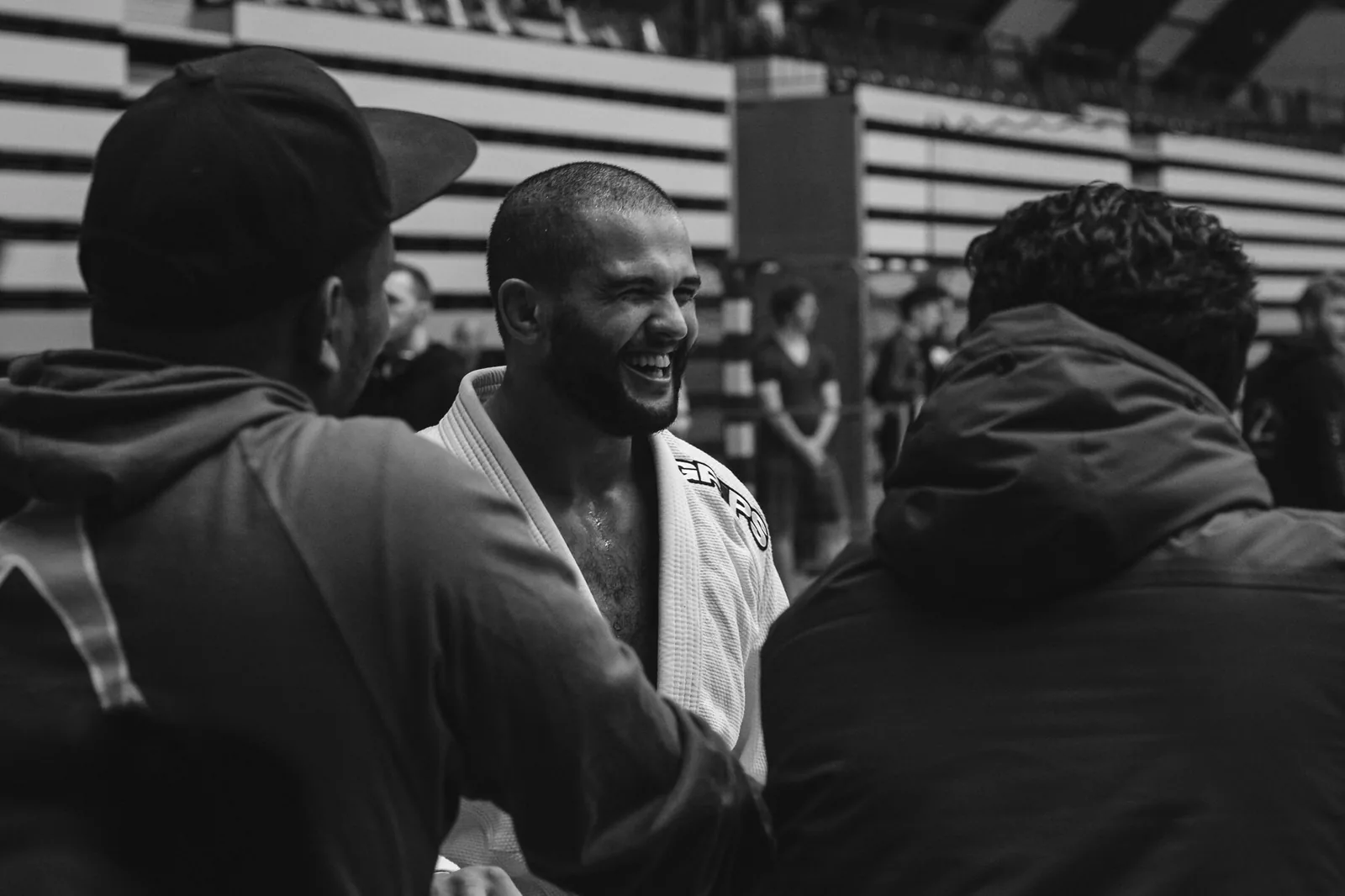
Brazilian Jiu-Jitsu is a complex martial art.
Most martial arts emphasize punches and kicks.
Mainly to the head and body.
Brazilian Jiu-Jitsu emphasizes control and submission.
The chance of suffering a brain injury is negligible.
The fight mainly takes place on the ground.
Why the ground?
Legs are dangerous, a lot of explosive power comes from them.
On the ground, people are easier to control.
The chance of serious injury is considerably less.
Your best chance against a large attacker?
Put him on his back.
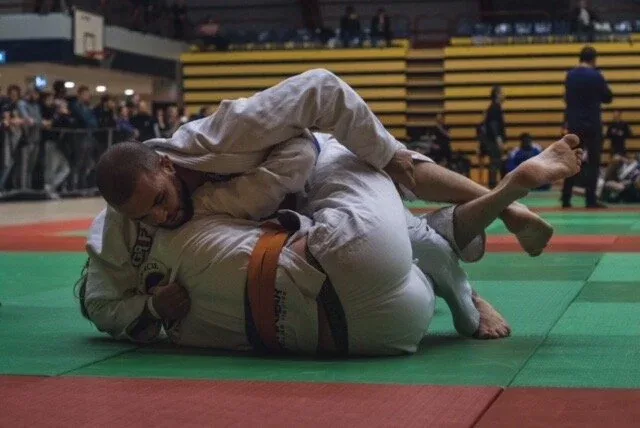
10 Physical benefits of BJJ
1. It's a fun way to exercise. (The most fun)
In Brazilian Jiu-Jitsu, we call sparring "Rolling".
This usually happens after a class where technique is taught.
Why is rolling so much fun?
You can do it at your own pace.
Go hard on Monday?! Because you couldn't resist the temptation of that loaded fries over the weekend> then you roll a bit harder and more aggressively!
Worn out from a day of work and raising your kids?
Then you roll a bit more defensively.
You don't need Dafne Schippers' VO2 Max to come to a BJJ class.
Because.
Technique is your best friend.
2.The initial phase of learning Brazilian Jiu-Jitsu (BJJ) can be a confusing, frustrating, and overwhelming process.
This confusion is understandable: BJJ is complex and you can easily get lost in the vast amount of details and techniques before you ever reach a certain level of mastery in the sport.
Now for the exciting part:
THAT'S WHAT MAKES IT SO FASCINATING
3. You can spar in every BJJ class without the consequences of brain injury.
Great, because you still need that brain.
The nice thing about this is that you can immediately test your techniques.
With resistance, which makes it realistic.
Different body types, weights, and ages make it interesting.
Practice, practice, practice.
4. BJJ is resilience training for people who don't like violence.
You gain valuable insights into survival.
I say survival because you can't always win.
That has nothing to do with losing.
When you are attacked on the street by a giant of a man.
And you survive the confrontation, with the concepts we teach you.
The one who controls the distance, close or far, minimizes the damage.
Then you win, because you can now go home to your family, partner, or relatives.
You learn how to control people almost pain-free.
It's better to choke someone unconscious with technique,
than to punch someone unconscious. (My opinion)
Two extremes, indeed, which one is less harmful?
I know the answer, now it's your turn.
Experience it in a free trial lesson
5. It is relevant for MMA Jiu Jitsu.
In particular, no-gi Jiu-Jitsu has rapidly become one of the styles used in MMA. Think UFC, Bellator, One FC.
Brazilian Jiu-Jitsu has proven effective in MMA.
If you want to test yourself in this, you can also learn that at BJJ Amersfoort.
Read more about it in our previous blog Gi vs No-Gi
6. Community is important within BJJ.
It is a brotherhood and sisterhood.
You share sweat, blood, and sometimes tears with each other.
Life is sometimes suffering, unfortunately.
Lifelong friendships are formed on the mat.
BJJ is also a sport where you can train side-by-side with your idols.
Suppose you are a football fanatic.
The chance that you will train with Messi or Ronaldo is 0.01%.
In BJJ, you can walk into your idol's academy and you will most likely meet him/her on the mat.
You do have to go abroad for that. Then you'll have something to show for it!
7. Competition
There are plenty of BJJ tournaments and competitions in the Netherlands to participate in.
In Europe, there are BJJ competitions all year round.
Competition gives you the opportunity to test your Jiu-Jitsu in an intense but safe way.
It also allows you to see the differences between the Jiu-Jitsu taught at your gym and the rest of the country or the world.
These are hosted by various organizations.
The largest in the Gi is the (IBJJF).
Other organizations that hold competitions in Europe and the Netherlands include UAEJJF and ADCC.
More about that in the blog Gi vs No Gi
Competition gives you the opportunity to test your Jiu-Jitsu in an intense but safe way.
Here you can measure yourself against different Jiu-Jitsu schools from the Netherlands or even the world.
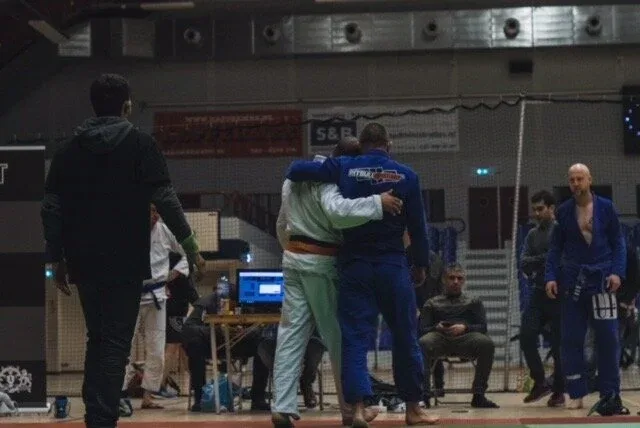
8. Progression and ambition
You can make progress when you consistently come to training.
BJJ works with a belt and stripe system that goes from white to black belt. That takes a few years.
You also have the coral and red belt. (Grandmasters)
Each organization and its affiliated school apply different standards for the belts.
At BJJ Amersfoort, we apply the standards of the JJGF and EGJJF
Rickson Gracie Jiu-Jitsu.
You will have to take exams to test your skills.
Belts are not given here, you earn them.
We also don't hit you on the back with a belt after you've earned yours.
If you've seen that on YouTube, that's not how we operate.
BJJ is an individual sport.
You do train under an organization.
But that doesn't mean you can't develop your own style.
Everyone can specialize in what they are good at.
Depending on your age, body type, and goals.
Provided you have mastered the basics.
9. Options to teach
If you had told me 8 years ago that I would be a BJJ teacher for a living, I would have called you crazy.
Teaching is not for everyone.
It requires patience and attention.
I didn't have that. I was focused on my own training and didn't want to teach.
My teacher insisted. I made many mistakes. That was allowed.
Now teaching is my passion. (And work)
If you want to try it, you can in BJJ.
We offer BJJ kids' classes where we train our beginners to become Jiu-Jitsu instructors.
Because teaching strengthens your knowledge, competence, and skills on the mat.
10. It's fun.
BJJ is complex but fun.
The first time I made someone tap.
I felt like a kid in Disneyland Paris.
When you succeed with submissions or defenses, it's very addictive.
It's also wonderful after a long (stressful) day to spar with your training partners
whom you know well.
And to playfully tease each other.
It goes beyond physical, so here are all the mental benefits as well.
7 Mental benefits of BJJ
1. It teaches you patience
In BJJ, you often have to wait for the right moment to escape or lure an opponent.
When trying to escape, especially when wearing a gi, you must patiently defeat all your opponent's attacks before you can escape.
2. It develops your problem-solving skills
Often in BJJ, you encounter positions and holds you are unfamiliar with. Sometimes you have to improvise on the spot to pass the guard or decipher certain BJJ styles.
Sometimes it works, sometimes it doesn't.
PRACTICE.
3. Discipline
Brazilian Jiu-Jitsu is mentally and physically challenging.
Coming to class every week requires discipline.
Get an impression of BJJ Amersfoort and watch this testimonial.
4. It develops your ability to handle pressure
The most important lesson I learned when starting Jiu-Jitsu.
RELAX.
Especially in tight positions where your first reaction is panic.
By relaxing under pressure, you can conserve your energy better.
As Kron Gracie says: Stay cool under pressure and plan your next move!
5. It makes you humble
It's normal to tap regularly when sparring.
This is necessary and crucial in your BJJ journey.
Tapping and losing gives your ego the necessary bumps when you come to train.
The reality is that there is always someone better than you.
6. Self-confidence
After training in BJJ for a long time,
It goes better for you during sparring or in competitions.
It doesn't get easier.
In my opinion, the belts are just a formality, they show where you currently stand in your BJJ journey.
The benefits of Jiu-Jitsu can also help with your self-confidence off the mat.
Think of your work, business, school, and life.
You can approach it from a different perspective.
BJJ = Life, as we sometimes say.
7. It is good for your mind
After a serious accident in 2006.
I came into contact with BJJ.
I can safely say that being depressed was the least of my problems.
BJJ literally and figuratively changed my life for the better.
Why?
It was good for my mind
It sounds crazy, but when someone is on top of you trying to choke you.
Many things are no longer relevant.
You live in the present moment.
For a moment, nothing else matters.
That's good.
How do you feel then?
Well, like this:
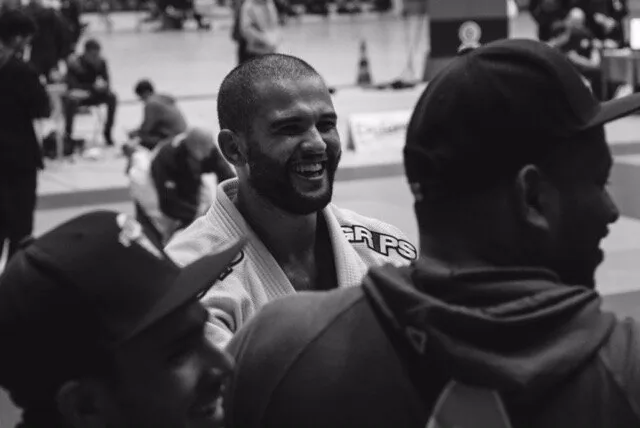
Do you want to know more about my story?
Then check out my podcast with Thijs Lindhout, who has millions of downloads to his name!
This article was originally published in Dutch. Read the Dutch original.