My first BJJ class, I never forgot. No idea how to fall or how to do a forward roll, and no clue how to defend myself if the fight went to the ground. Furthermore, I had no realistic idea what someone could do if they had you under control.
Dear (future) white belt.
This is what you can expect in your first month of BJJ. Here are some tips on how to get through this period successfully.
Injuries
I don't want to scare you, but you will get injured in Brazilian Jiu-Jitsu.
Initially, this will mainly consist of bruises, scratches, and rib pain.
Injuries are part of every sport. If you serve hard, you might get a tennis elbow. One wrong twist in soccer and there goes your ACL. Be aware of this and prevent the most common injuries in BJJ with these tips!
Many injuries can be prevented by learning how to fall safely and by tapping early. After a few months of 'rolling' (sparring in BJJ jargon), you will learn your limits. And your injuries will be drastically reduced.
A useful tip: do mobility exercises daily and make it a habit. On our YouTube channel Jiujitsu Amersfoort I have filmed a nice routine for you.
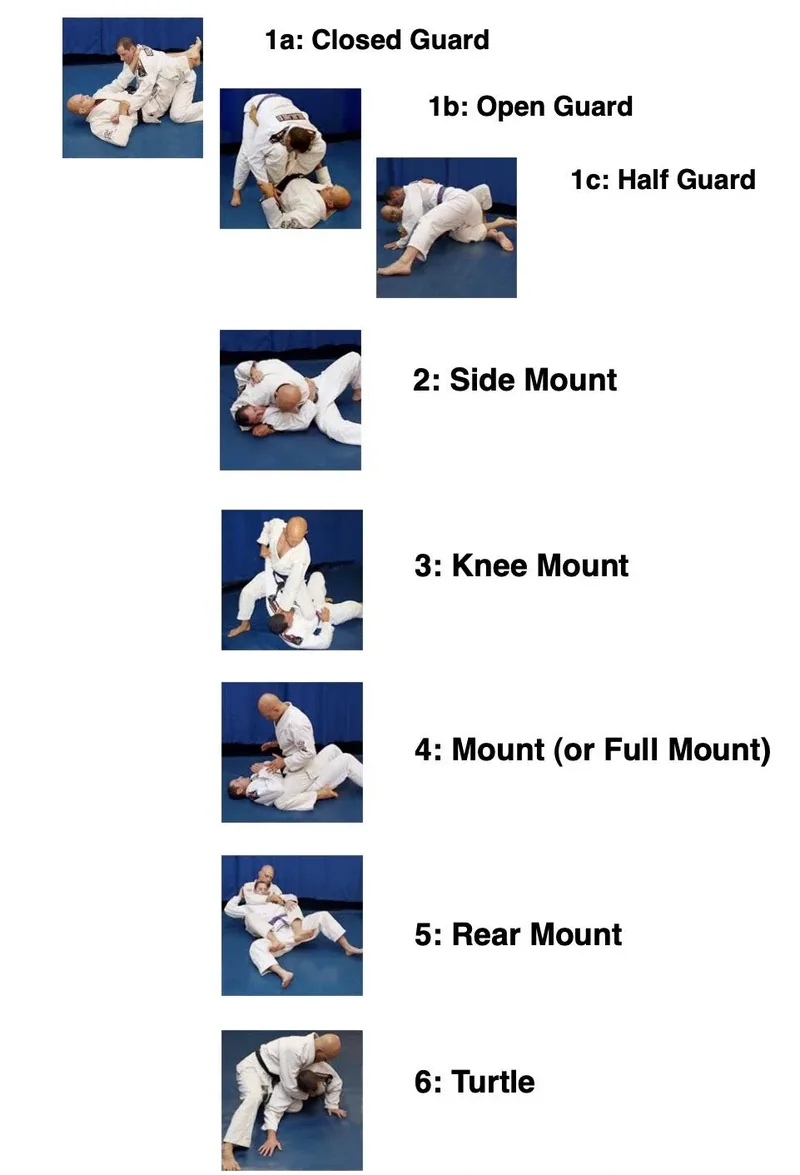
Study the basic positions
BJJ is more complex than you think.
For every basic position, there are dozens of ways to get to another position. Then you have multiple ways to get a submission. Some positions are better than others, it can be difficult to know where to start.
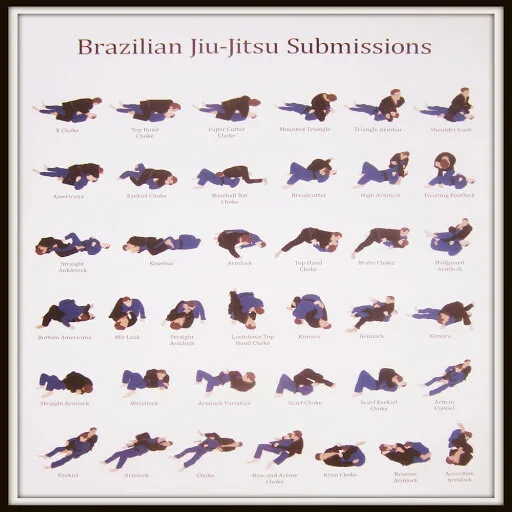
Below you see the basic positions that give you a good overview.
These positions are the building blocks within Brazilian Jiu-Jitsu.
Keep a logbook
You will learn quite a few techniques in your first month.
Some techniques you pick up faster than others.
There's a lot coming at you, after all, it's a lot of information to process. Of course, you will forget a few that you have more trouble with.
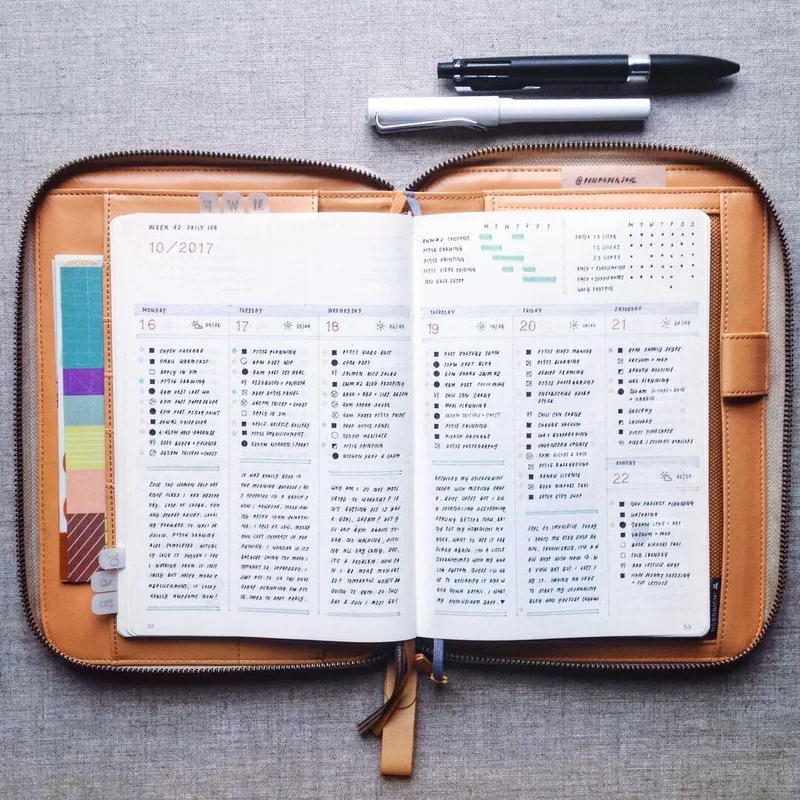
You can minimize this by writing down the techniques in your logbook.
For each technique, you can note down the basic steps.
A technique I have successfully applied for years is visualization training. You need to do the necessary research for this and possibly find a coach who can help you. This can give your BJJ development an enormous boost.
BJJ is a study
Brazilian Jiu-Jitsu is a lifelong study. After a few weeks, you'll have a small idea of what's possible. You roll every class, and of course, you'll tap often. This is simply part of the process that no one escapes!
It only really gets fun when you make someone tap with techniques you learned in class. (Mat etiquette: don't brag about it)
This gives you the feeling that you can do it too. That often makes you want more.
You can also learn a lot about Brazilian Jiu-Jitsu even when you are not on the mat.
In another blog, I have listed a top 10 books for you that can contribute to your BJJ development.
/blog/2020/4/20/de-10-jiujitsu-boeken-die-jij-moet-lezen-voor-je-bjj-ontwikkeling
Invest in private lessons and seminars
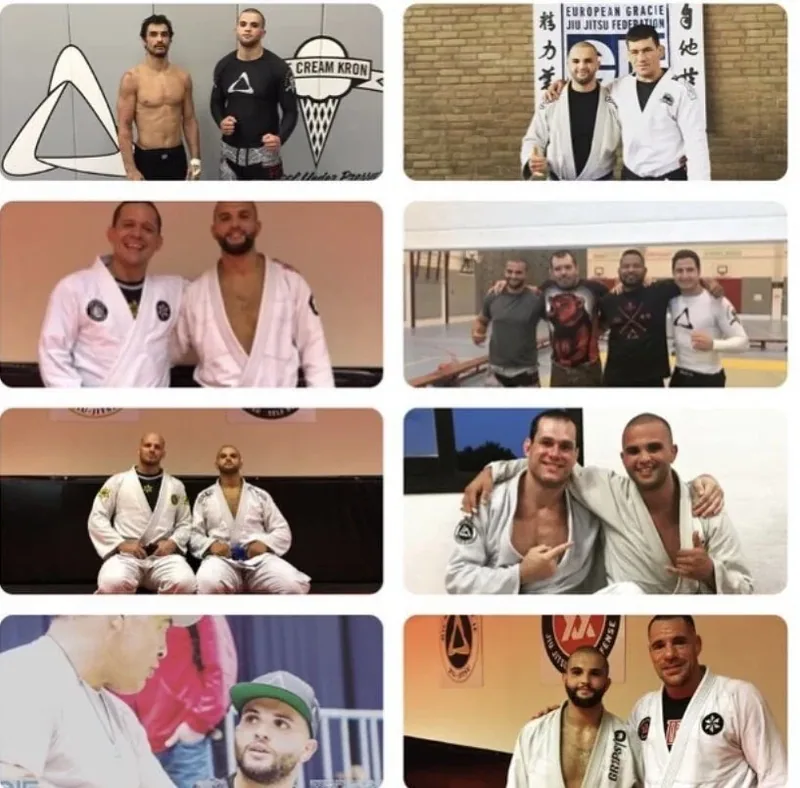
In recent years, I have had the privilege of learning from the very best in the world. It is not cheap, which is why I refer to it as an investment.
You will gain insights into concepts, techniques, and the mindset of world champions. A good seminar is based on concepts or one aspect of Brazilian Jiu-Jitsu for which the person is known.
Think of someone known for their guard or leg locks.
Seminars often last three hours. Come prepared and rested. Film the techniques with a training partner after the seminar and drill them at your next open mat!
(Ask if you can film or take notes during a seminar, there are often different rules for this)
BJJ becomes an addiction!
BJJ is human chess. It stimulates you physically and mentally. You have to make decisions under pressure.
For me, it is an intensive form of meditation. You don't have to think about anything other than solving the problem in the present moment. When do you ever have an hour a day completely to yourself without distractions?
You can develop a (healthy) obsession with the techniques, you're even thinking about them after classes. You think about what you can do better for the next training session. You also develop a strong bond with your teammates. Although it is an individual sport, you need your teammates to get better!
Bonus tips:
To choose is to say no.
When I started BJJ, I boxed four times a week, cross-fitted four times a week, and did Olympic weightlifting. At first, I underestimated BJJ training and soon realized my mistake.
I realized I had to make a choice. To do one thing as well as possible, and that was Brazilian Jiu-Jitsu. Now I train seven days a week for years. Of course, with different intensities and kettlebell supplementary training. It's simple: if you want to be good at your sport, do more of your SPORT.
Safety
Save yourself a lot of trouble and buy a good mouthguard. Knee pads are also recommended. I am a fan of the brand Trace. They significantly reduce the impact on your knees.
Listen to podcasts
I listen to a podcast almost every day. You learn insights and different perspectives.
Check our blog for Amersfoort BJJ's top 10 podcasts.
Circle of friends
It might be that someone in your acquaintance circle trains Brazilian Jiu-Jitsu.
Send them a message and ask if you can join them sometime!.
Interested?
This article was originally published in Dutch. Read the Dutch original.