These five Jiu-Jitsu principles will keep you alive in street confrontations
Street fighting is very different from sparring with your training partners in the gym.
Street fights are chaotic and (often) happen spontaneously.
Usually triggered by emotions, and they happen faster than you realize.
There are certain principles you need to know when it comes to street fights.
1: Maintain your distance at all times.
Most street fights end within seconds of starting.
This is usually because the attacker goes straight for the jaw from close range, aiming for a knockout.
This often happens cowardly, when you least expect it.
Dodging or blocking an unexpected punch is very difficult due to reaction time.
To prevent this, you need knowledge of distance management.
The one-and-a-half-meter rule is therefore the perfect solution for this.
Always ensure there is at least an arm's length distance between you and your attacker.
You don't necessarily have to extend your arm, but keep your hands near your diaphragm.
You can pretend to be rubbing your hands.
This is one way to buy time and get out of a dangerous situation.
2. The trigger point
Before a street fight erupts, there is usually a trigger point.
This is the point where the attacker, usually out of emotion, decides that talking is not an option and starts striking first.
That is the trigger point.
You can approach this in several ways.
You can try to de-escalate the conflict.
Preferably by calming the person, or you can act before he reaches the trigger point.
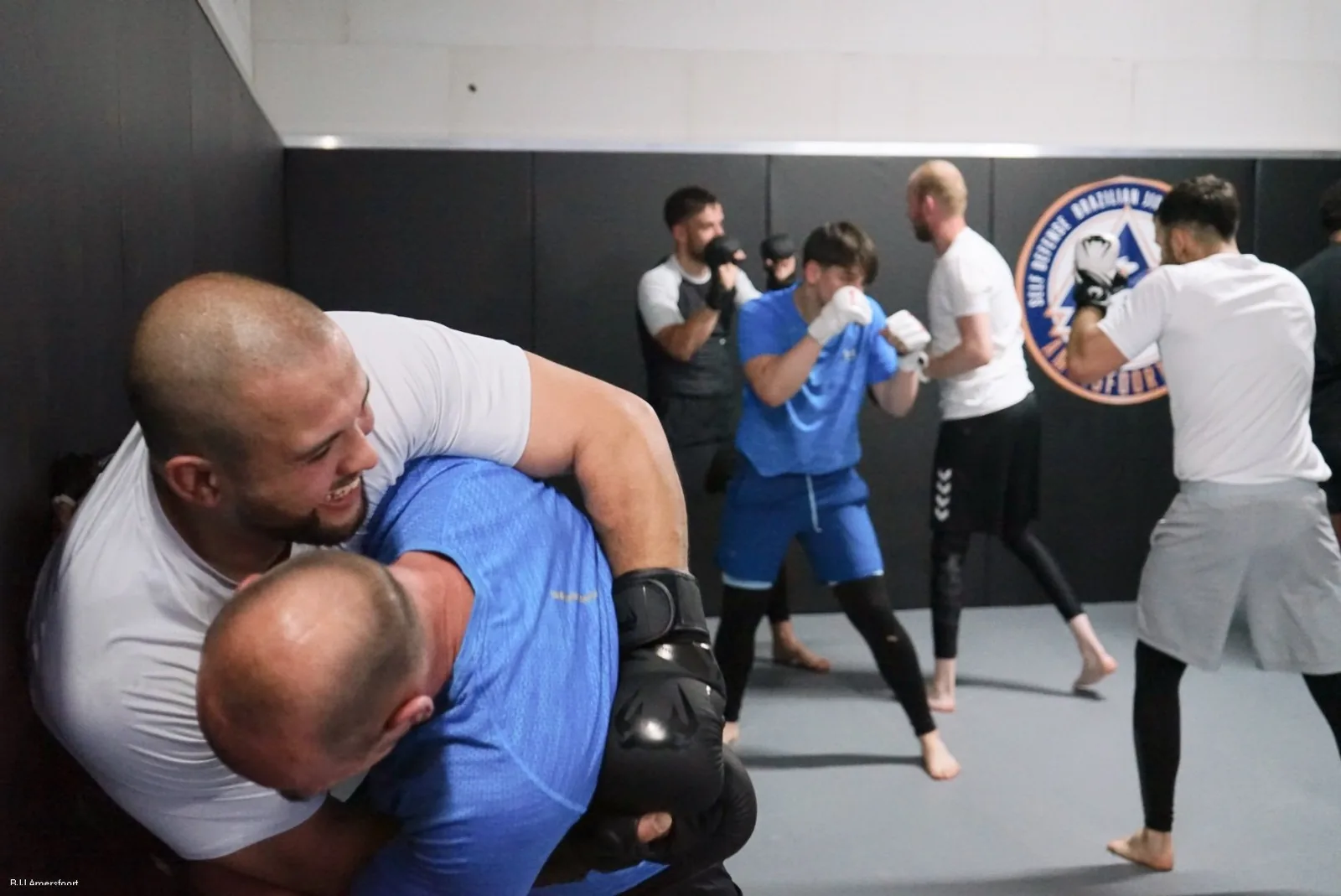
Clinching and taking down is usually the least painful action.
An example of how we train the clinch position at BJJ Amersfoort!
3. Environment
Environment is incredibly important.
Street fighting has no rules.
Therefore, you must be aware of several things.
1: Where is the exit?
2: Does that person have weapons?
3: Where are the walls? (where you might be pushed against)
4: Are there other attackers?
Use the environment to YOUR advantage!
Running away is always a good idea, so keep the exit in mind.
You can train this.
Make it a habit when you go to a restaurant or coffee shop.
To consciously note the exits.
Also, watch out for others, as they might be friends of the attacker.
Try to keep everyone in your field of vision.
Also, consider nearby objects, such as chairs, bottles.
When you have no other choice, USE THEM!
Otherwise, your attacker will do it for you.
4. Control
Once the fight begins, YOU want to determine where the fight takes place.
Generally, you want to avoid the ground, unless you are absolutely certain it's a one-on-one fight.
You also want to avoid being taken down and having to fight on the ground, mainly due to the risks of slams.
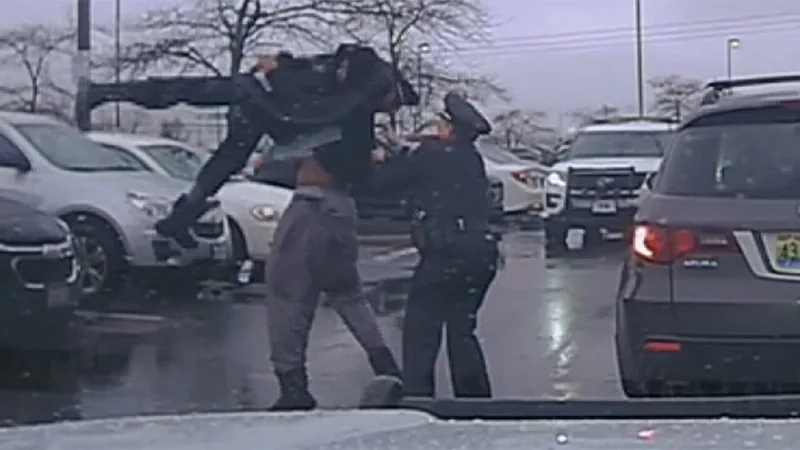
5. Distance
Maintaining your distance is one of the most important aspects of street fighting.
You want to stay out of reach.
As Rickson Gracie demonstrated in the video above.
Step in when you strike, then step back out of reach.
By maintaining your distance, you can better observe your surroundings.
This is in case you need to escape or anticipate other dangers.
Don't stay in your attacker's zone for too long.
Fists are much smaller than boxing gloves.
It is much easier to get hit by a close-range punch.
It will go right through your guard.
Every 34 seconds, there is a violent confrontation somewhere worldwide.
Are you prepared for it?
This article was originally published in Dutch. Read the Dutch original.