Workouts/exercises for BJJ professionals and recreational practitioners.
Strength and conditioning are important for performance in any sport.
In Brazilian Jiu-Jitsu, this is also true.
A stronger, fitter BJJ practitioner will be able to give someone of the same skill level who doesn't pay attention to this a tough time.
You are harder to control and a much greater threat than a slower, weaker opponent.
There is no single ready-made way to train for BJJ.
The idea that we should choose is a false dichotomy.
Training and exercises for BJJ can be based on traditional strength training and conditioning with a specific focus on the needs of Brazilian Jiu-Jitsu athletes and hobbyists at both a sporting and individual level.
Nowadays, strength and conditioning training is everywhere, especially popular due to CrossFit.
However, optimizing BJJ performance with strength and conditioning requires more attention and planning than general fitness routines.
In this article, we will discuss certain fundamentals, strategy, and the creation of training programs for competitive BJJ athletes and hobbyists.
By the end of the article, you should have enough information to start with strength and conditioning for BJJ, and a better idea of the specific strength and conditioning needs of BJJ.
Table of Contents
Should BJJ practitioners lift weights?
Finding a BJJ strength and conditioning routine
Principles of strength and conditioning for BJJ
Muscle groups and exercise selection for BJJ training
Should you do Olympic lifts and Kettlebells for BJJ?
Conditioning training for Brazilian Jiu-Jitsu
BJJ strength and conditioning: practical considerations for 'pro' BJJ practitioners.
Jiu-Jitsu strength and conditioning: practical considerations for 'recreational' BJJ practitioners.
Conclusion
Should BJJ practitioners lift weights?
Jiu-Jitsu was developed for smaller and weaker people.
With it, you can defeat a much larger and stronger opponent by taking them to the ground.
This way you can survive a confrontation, we choose the ground because there is much less explosiveness there.
However, when someone also practices BJJ, and is strong and has good conditioning, it becomes a different story.
At the highest level today, nobody claims that you shouldn't lift weights and work on your conditioning.
.
Strength, speed, and conditioning play an important role in competitions. Of course, you must have technical skill in Jiu-Jitsu.
Otherwise, a CrossFitter or a biathlete would win everything if it only came down to strength and conditioning.
Do you want better athletic performance, to prevent injuries as much as possible, and a longer career in the sport?
Then it is important that you, as a Jiu-Jitsu practitioner, pay attention to this.
Finding a BJJ strength and conditioning routine
There are currently an enormous number of providers of training routines.
But finding a practical and effective strength and conditioning routine for BJJ is still quite a difficult task.
Quality is, of course, the most important factor.
It's not hard to train yourself into the ground.
What is difficult is progressively improving without breaking down your body.
This applies to both hobbyists and competitive BJJ practitioners.
A strength routine for BJJ will differ for each person, depending on your BJJ skill level, previous experience with strength and conditioning, and competition goals.
Therefore, it is important to do specific strength and conditioning training for BJJ.
The training should focus on developing athletic qualities such as maximal strength and aerobic training.
Conditioning followed by explosive power and BJJ-specific conditioning.
Hobbyists and recreational BJJ participants who are interested in strength and conditioning can follow similar programs as competitive athletes.
You must, of course, consider volume, intensity, and basic conditioning.
Principles of strength and conditioning for BJJ
The muscle groups most needed for BJJ remain the same for practitioners of all levels.
Basic strength exercises are often used in a BJJ training program.
Adjustments in intensity and training variation should be set according to the goals of each phase in your training program.
BJJ strength programs should develop maximal strength with a focus on developing explosive power, where maximal strength is combined with speed.
Most Jiu-Jitsu matches last 5 to 10 minutes.
So, a bit of conditioning is just as important as strength, completing your circle.
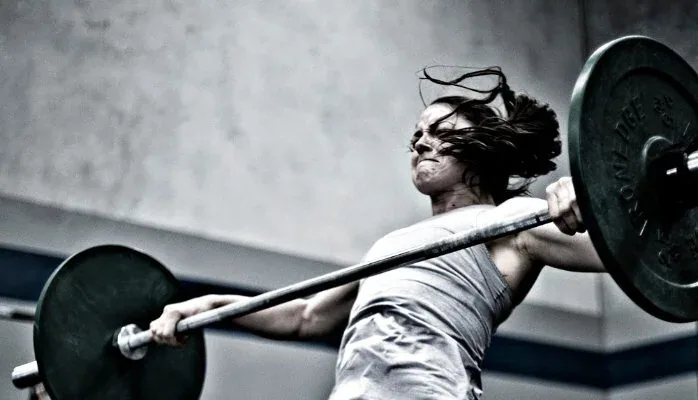
Because BJJ requires you to be explosive when fatigued, conditioning should focus on high-intensity interval training.
Muscle groups and exercise selection for BJJ training
BJJ competitions can be very dynamic.
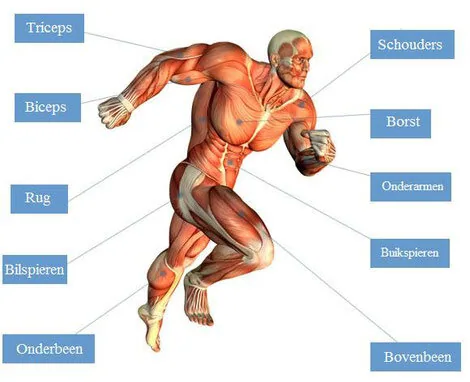
You must therefore train a wide range of muscle groups to optimize your strength for BJJ.
In this blog, we discuss the most important muscle groups used in BJJ, and useful exercises.
We focus on compound exercises that train muscles and stabilizers.
We focus on the safest exercises that do not require extensive technique training and can be learned relatively quickly.
The sets and repetitions depend on the training phase you are in.
Upper body: back, chest, and shoulders
You need push and pull strength from the upper body for both gi and no-gi competitions.
A gi competition also requires considerable strength and endurance when gripping the jacket (gi).
The large upper body muscles needed for BJJ are the latissimus dorsi and rhomboids in the back for pulling strength.
The pectorals and shoulders are for pushing and gripping.
Proper upper body strength training should train all major upper body movements, both horizontal and vertical pushing and pulling.
Many of the push and pull exercises will improve your grip.
You can make pull-ups and rows heavier by hanging a towel or an old gi from a pull-up bar and doing pull-up variations.
Row variations with thicker bars or PVC pipes will also significantly improve your grip.
That being said, even the standard variations of these exercises will significantly improve your grip.
Lower body: glutes, quads, and hamstrings
Lower body strength is also crucial for BJJ, particularly in hip hinge movements and leg extension.
A good guard in BJJ requires you to be able to push and pull your opponent with the combined effort of your arms and legs. This means good hip flexion (i.e., bringing your knees to your chest) and extension (i.e., bridging). Many guard passes and submissions, such as the armbar and the triangle, also rely on strong hip extension.
The muscles needed for these movements are the glutes and hamstrings.
Core: abdominals, obliques, and transverse.
Core strength is crucial and therefore truly belongs in your BJJ strength training program.
Having strong abdominal muscles makes it easier and faster to come up, move back and forth, and rotate the torso and hips.
These movements are crucial for passing guard, maintaining a good base, and unbalancing your opponent to set up sweeps and submissions from the guard.
Bracing your abdomen against pressure while continuing to breathe is another crucial aspect of core strength and can be trained using various isometric abdominal exercises (discussed later in the article).
The muscles needed for these movements are the rectus abdominis (abs), the obliques, and the transverse abdominis (the deep core muscle responsible for rotating the torso).
Should you do Olympic lifts and Kettlebells for BJJ?
If you have been in the sport for some years and have good movement patterns, it might be a good idea to get weightlifting coaching.
Olympic lifts are a great tool for developing strength.
Roger Gracie and other Jiu-Jitsu greats are big fans of them.
In this article, we won't go too deeply into them.
This is because Olympic lifts are a skill in themselves.
It is worth mentioning that strength training, push-jerks, and snatch variations are excellent ways to develop explosive power for those who pay attention to these techniques.
Kettlebells are another popular option you can use to develop strength for BJJ.
There are plenty of kettlebell exercises to improve your BJJ.
But the two most important exercises are the kettlebell swing and the Turkish get-up.
Most dumbbell exercises have a kettlebell variant.
Kettlebells have the advantage of being somewhat unstable, which provides a different stimulus.
That's a nice bonus for your strength routine.
The downside is that you cannot lift as much weight with them as with a barbell.
Example exercises for Brazilian Jiu-Jitsu
Pulling
Dumbbell/Kettlebell bent rows
Barbell Bent-Over Row
Pull-ups - Different grips
Pushing/Pressing
Barbell bench press
Dumbbell bench press
Barbell Overhead Press
Dumbbell Overhead Press
Kettlebell overhead press
Hip-Hinge
Romanian Deadlift
Barbell Glute Bridge
Kettlebell Swing
Squat
Barbell Back Squat
Trap Bar Deadlift
Split Squat
Power
Plyometric Pushup
Depth Jump
Weighted Squat Jump
Box Jump
Push-Press
Medicine Ball Slam
Medicine Ball Toss
All-out sprint
Core Flexion
Hanging Leg Raise
Windshield wipers (hanging from a pull-up bar)
Core Bracing
Dead bug
Band Anti-Rotation Press
Turkish Get Up
Rotation
Landmine Barbell Twist
Conditioning training for Brazilian Jiu-Jitsu
Conditioning for BJJ revolves around short to medium-length explosive movements, followed by rest intervals.
The duration of the conditioning should be between 3 and 8 minutes, depending on the expected duration of the matches, and should include periods of higher and lower intensities during the training.
BJJ training alone is often insufficient to improve VO2 max.
To prepare for the intensity of competition, it is therefore important to work on your VO2 max off the mats.
Your training intensity during intervals should be more than 85-95% of your maximum heart rate.
A fairly simple method to estimate your intensity is the 'talk test'.
To pass the "talk test," you need an intensity where you are unable to speak in complete sentences, both during and immediately after the rest period.
While there are much more accurate ways to determine maximum heart rate, the talk test is a reasonably reliable way to ensure you are within the correct intensity range to achieve improvements in your conditioning.
You don't want to give 100%, but you do want to train in a way that pushes your limits.
Rest periods
Rest periods should be approximately 3 minutes.
The number of intervals depends on the training phase at that moment.
The intervals performed depend on the training phase, but in general, this type of conditioning will be present during every training phase.
Example conditioning exercises
Assault Bike
Rowing
Stairmaster
Jogging/Sprinting

BJJ exercises for a warm-up, mobility, and injury prevention.
Injury prevention is often overlooked in strength and conditioning programs for BJJ.
You only need to attend one BJJ class to realize the impact it can have on your joints and body.
The most common injuries are to the elbows, knees, neck, and shoulders. Joint mobility and flexibility in the surrounding muscles can help prevent injuries in addition to improving your performance on the mat.
A good warm-up is important, in addition to regular stretching.
The following exercises can be performed as a warm-up for strength training or as a mobility routine on rest days.
T-Spine Rotation
Bird-Dog
Glute Floor Bridge
Hindu Pushup/Downward Dog to Cobra
Hamstring Stretches
Glute Stretches
Example warm-up program
You can do the following warm-up before all training sessions; feel free to add other mobility or warm-up exercises:
T Spine rotations 2×10
Bird Dog 2×10
Glute Bridge 2×10
Down-Dog to Cobra 2×10
Planning and Progression - BJJ Strength and Conditioning Program
While there are multiple ways to program a BJJ strength training routine, this is an example of a BJJ program in three phases.
With this type of program, you learn to peak at the end of phase 3, just before a tournament.
Each phase lasts one month, followed by a deload week.
This program is based on the research of James Lachlan, Nathaniel Brian Jones et al., and the more recent work of Karsten Øvretveit.
They assume you have access to good equipment, a BJJ program for on the mat, and know how to recover from your training.
This is, of course, an unrealistic expectation for many Jiu-Jitsu practitioners who are not world-class athletes; there is a different program for them.
The goal of strength training in this program is to build a base of muscle mass in phase one, followed by strength in phase two, and power development in phase three.
Conditioning in phase one focuses on general cardio.
Phase two and three will focus on more intensive BJJ-specific conditioning.
BJJ training should focus on drilling in phase one and less intensive rolling.
Phase two involves high intensity during BJJ training.
In phase three, you will focus more on specific tactics for competitions. Intensive rolling and sufficient rest to maintain intensity optimize peak performance during competition (19).
Use a weight for each exercise where you just barely fail to complete the prescribed number of repetitions.
Knowing your 1-rep max (1RM) for each lift will be helpful in determining the weight you should use, but it is sometimes unrealistic to know this for every lift.
Although this BJJ strength program is intensive, it is a fantastic training structure if you plan to perform at your best in competitions.
Example competition strength program for competitive BJJ athletes
Phase 1 focuses on building a base of muscle mass to enable further strength and explosiveness in phases 2 and 3.
BJJ alone will not build muscle.
Brazilian Jiu-Jitsu training does not provide the right stimulus for muscle growth.
Using weights with sets of 8-12 repetitions, challenging yourself but not going to failure, will increase muscle mass.
Most Jiu-Jitsu practitioners are not bodybuilders.
We are therefore not keen on creating maximal muscle mass.
It is important to build your muscle base and develop a certain level for your strength and explosiveness.
During phase 1, you can gain approximately 1 to 2 kg of muscle mass depending on your eating patterns and lifting experience.
Conditioning training during phase 1 focuses on general aerobic interval training.
Day 1: Heavy Lifting, BJJ Drills/Flow Rolling
Exercises - 3 sets of 8-10 repetitions at 75% 1RM:
Trap Bar Deadlift or Barbell Back Squat
Overhead Barbell Press or Dumbbell Overhead Press
Floor Bench Press or Floor Dumbbell Press
Romanian Deadlift
Pull-ups
Barbell Row or Dumbbell Row
Day 2: Conditioning, BJJ Drills
Intervals - Rowing 3×3 minute sets with 2 minutes rest - 45 seconds at 95% intensity, 45 seconds at 75% intensity.
Day 3: Lifting (light), Core - BJJ Drills/Sparring
70% of your heavy lift day (or 60% 1RM)
Trap Bar Deadlift or Barbell Back Squat
Overhead Barbell Press or Dumbbell Overhead Press
Floor Bench Press or Floor Dumbbell Press
Romanian Deadlift
Pull-ups
Barbell Row or Dumbbell Row
Core - Hanging Leg Raise, Barbell Landmine Twists, Dead-bug holds - 3×10
Day 4: Conditioning, BJJ Drills
Intervals - Assault bike 3×3 minute sets with 2 minute rest - 45 seconds at 95% intensity, 45 seconds at 75% intensity
Day 5: Heavy Lifting, BJJ Drills
Exercises - 3 sets of 8-10 repetitions at 75% 1RM:
Trap Bar Deadlift or Barbell Back Squat
Overhead Barbell Press or Dumbbell Overhead Press
Floor Bench Press or Floor Dumbbell Press
Romanian Deadlift
Pull-ups
Barbell Row or Dumbbell Row
Day 6 - Rest/Active Rest/Mobility
T Spine rotations 2×10
Bird Dog 2×10
Glute Bridge 2×10
Hamstring/Glute stretches
Day 7 - Rest/Mobility
Phase 1 progression should involve increasing the weight each week if you are able to successfully complete 3 sets of 12 reps on each exercise.
For the progression of phase 1, the weight should be increased each week if you can successfully perform 3 sets of 12 repetitions with good technique for each exercise.
Deload
After four weeks, you follow the same training schedule for your deload week.
However, at 50% of your 1RM!
Phase 2
In this phase, you will focus on building maximal strength after your muscle growth from phase 1.
The exercises remain the same, but you increase the resistance so that performing 5 repetitions is challenging.
Work towards a weight for each exercise where you almost fail after 5 repetitions (approximately 85% of your 1RM).
Conditioning for phases 2 and 3 is more focused on BJJ-specific training: maximum effort with short bursts, plyometrics, and also some weighted exercises.
Day 1: Heavy Lifting Day, BJJ Drilling/Position Rolling
Strength exercises - 3 sets of 5 repetitions 85% 1RM:
Trap Bar Deadlift or Barbell Back Squat
Overhead Barbell Press or Dumbbell Overhead Press
Floor Bench Press or Floor Dumbbell Press
Romanian Deadlift/Barbell Glute Bridge
Pull-ups
Barbell Row or Dumbbell Row
Day 2: Active Recovery, Mobility, BJJ Drilling/Position Sparring
Intervals - Rowing 3×3 minute sets with 2 minute rest - 45 seconds at 95% intensity, 45 seconds at 75% intensity
Day 3: Conditioning, BJJ Drills /Sparring
Round 1: Repeat 5x with 30 seconds rest between sets - Jump squat - 25 seconds @ 40% Trap Bar 1RM, Medicine Ball Slam - 5 Seconds @ 40% 1RM
Rest 1 minute
Round 2: Repeat 5x - Sled push 25 seconds @ 70% maximum, 5 Seconds at 100%.
Day 4: Lifting (Light), Core, BJJ Drills/Sparring
Core - Turkish Get-Up, Band Anti-Rotation press
Strength exercises: 3 sets of 5 repetitions 70% 1RM
Trap Bar Deadlift or Barbell Back Squat
Overhead Barbell Press or Dumbbell Overhead Press
Floor Bench Press or Floor Dumbbell Press
Romanian Deadlift/Barbell Glute Bridge
Pull-ups
Barbell Row or Dumbbell Row
Day 5: Conditioning, BJJ Drills/Sparring
Round 1: Repeat 5x with 30 seconds rest between sets - Box jump - 25 seconds at 40% Trap Bar 1RM, Plyometric medicine ball push-up - 5 Seconds
Rest 1 minute
Round 2: Repeat 5x with 30 seconds rest between sets - Assault bike 25 seconds at 70% maximum, 5 Seconds at 100% maximum
Day 6 - Rest/Active recovery /Mobility
Light Jog/Swim - 30 minutes
T Spine rotations 2×10
Bird Dog 2×10
Glute Bridge 2×10
Hamstring/Glute stretches
Day 7 - Rest
Phase 3 - Power/Strength
Day 1 - Power, BJJ Position Sparring
Depth Jump 3×5 repetitions
Push Press 3×5 repetitions 90% Overhead Press 1RM
Jump Squat 3×5 reps 30% 1RM
Medicine Ball Toss - 6-9 KG
Day 2 - Conditioning, Core, BJJ Position Sparring
Core: Hanging Leg Raise, Barbell Twist
Round 1: Repeat 5x with 30 seconds rest between sets - Jump squat - 25 seconds @ 40% Trap Bar 1RM, Medicine Ball Slam - 5 Seconds @ 40% 1RM
Rest 1 minute
Round 2: Repeat 5x - Sled push 25 seconds @ 70% max Effort, 5 Seconds @ 100% max effort
Day 3 - Active Rest/Mobility BJJ Specific drilling
Mobility warm-up
20 minute light jog
Day 4 - Strength, BJJ Position Sparring
Strength exercises: 3×5 85% 1RM (2 weeks before a competition 50% 1RM)
Trap Bar Deadlift or Barbell Back Squat
Overhead Barbell Press or Dumbbell Overhead Press
Floor Bench Press or Floor Dumbbell Press
Romanian Deadlift/Barbell Glute Bridge
Pull-ups
Barbell Row or Dumbbell Row
Day 5 - Conditioning, BJJ Position Sparring (Mobility and rest day before your competition)
1st round: Repeat 5x30 seconds with rest between sets
Box jump 25 seconds
40% Trap Bar 1RM
Plyometric medicine ball push-up 5 Seconds
Rest 1 minute
2nd round: Repeat 5x with 30 seconds rest between sets
Assault bike 25 seconds 70% max Effort
5 Seconds 100% max effort
Day 6 - Mobility, Rest/Competition
Day 7 - Rest/Competition
BJJ strength and conditioning: practical considerations for 'recreational' BJJ practitioners.
Most people who review the above program will think I'm crazy.
Which is logical, because most of us have a 9-5 job, a family, and many other responsibilities.
That doesn't mean you can't follow a good and efficient program.
Perfection is your greatest enemy.
If I had as much time as professionals, well then I would be that fit and strong too!
I hear this kind of nonsense often.
A GOOD ENOUGH PROGRAM IS BETTER THAN NOTHING!
A little bit every day always wins over a lot in a short time.
I tell this to all my students at BJJ Amersfoort daily.
Two strength and conditioning sessions per week are more than enough to keep yourself fit and prevent injuries as much as possible.
You can halve and simplify the professional program.
The framework is as follows:
If you want to build muscle, you should still stick to 8-12 repetitions with a weight that is approximately 75% of your 1RM.
For strength, you should stick to 5 repetitions or fewer with a heavier weight.
The framework of this program is quite simple.
Choose one exercise for each group (upper/lower body) and perform it twice a week.
Do the mobility warm-up and 2 different exercises with each workout. If you have time for conditioning training, intervals on the Assault bike or Rower are very good low-impact options.
4 minutes of high-intensity intervals on such a machine and you'll wonder why you're doing this again!
Strength Program for Recreational BJJ Practitioners - 2-4x Per Week
Phase 1 - Muscle building - 4 weeks - 8-12 repetitions 75% 1RM
Deload week - 1 week following Phase 1 at 40% 1RM
Phase 2 - Strength - 4 weeks - 5 repetitions 85% 1RM
Deload week - 1 week following Phase 2 at 50% 1RM
Phase 3 - Power - 4 Weeks - Varied repetitions.
After Phase 3, you are quite close to your peak.
This would be a good time to plan a competition or just enjoy your peak performance.
After Phase 3, take a rest and relaxation week.
You can repeat the cycle with different exercises or variations for each body part.
Phase 1 and 2
Perform each workout 1-2 times per week.
Do not do this 2 days in a row.
Do your conditioning training 1-2 days after weight training or on a separate day.
Try to take at least 1 full rest day each week.
You can do the mobility routine before each training session.
Day 1 - Upper Body
3 sets - 8-12 repetitions 75% 1RM (Phase 1), 5 Reps 85% 1RM (Phase 2)
Overhead Barbell Press
Bench Press
Pull-ups
Dumbbell Row
Core
Hanging Leg Raise - 3×10 (Phase 1 and 2)
Barbell Landmine Twist - 3×10 (Phase 1 and 2)
Cooldown
Hamstring and Glute Stretch
Day 2 - Lower Body
3 sets - 8-12 repetitions @75% 1RM (Phase 1), 5 Reps @ 85% 1RM (Phase 2)
Trap Bar Deadlift
Romanian Deadlift
Barbell Glute Thruster
Core
Dead Bugs - 3×10
Band Anti-Rotation Press - 3×10
Cooldown
Hamstring and Glute Stretch
Day 3 - Conditioning
Phase 1 - Rowing - 30 seconds hard, 30 seconds easy - 2 sets of 5 minutes each with 1 minute rest
Phase 2 - Assault bike 25 seconds 70% max Effort, 5 Seconds 100% max effort
Phase 3 - Power
This simple strength routine is great for people short on time.
The BJJ-specific conditioning is the cherry on top.
Day 1 - Upper Body Power
Push-Press - 3×5 85% 1RM
Medicine Ball Slam 3×5 6-9 kg
Plyometric Push-up 3×5
Explosive chest-to-bar pull-up - 3×5
Day 2 - Lower Body Power
Depth Jump - 3×5
Jump Squat - 3×5 @ 30% 1RM
Sprints - 5×15 seconds
Day 3 - Conditioning
5x in total, rest 2 minutes, repeat:
15 Kettlebell Swings
5 Burpees
Conclusion
Whether you are a professional BJJ athlete or a recreational practitioner, you need strength and conditioning training.
There are no ready-made programs that work for everyone.
What you can do is carefully plan your training.
Look at what YOU need and where your weaknesses/strengths lie.
This is your foundation for strength and conditioning.
If you are preparing for a tournament, make sure you have a good strength and conditioning program leading up to your matches.
This will prevent fatigue from overtraining.
If your goal in BJJ is to train three days a week and be as good as possible on the mat, it is still worth doing strength and conditioning.
Even if you only do this two days a week, you will notice a big difference compared to not doing it.
This way you prevent (most) injuries and ensure that you can continue training Jiu-Jitsu in the long term and enjoy your time on the mat.
When you want to burn fat, get 'lean,' or build muscle, a good nutrition program for BJJ is crucial.
While this is a topic for another article, nutrition, lifestyle, and sufficient sleep are the foundation of your recovery.
In my opinion, something like overtraining doesn't exist.
Under-recovery is usually the problem.
This article was originally published in Dutch. Read the Dutch original.