BJJ Amersfoort is here to help you get better at Jiu-Jitsu faster.
That doesn't mean it will be easy, of course.
How do you get better at Brazilian Jiu-Jitsu faster?
Well, like this:
1: Train often:
You can't come once a week and then wonder why you're not making big strides after a year.
If you consciously choose that because you do BJJ for fun, that's perfectly fine, of course.
Anyone who wants to learn BJJ quickly needs to put in mat hours.
The minimum is four times a week.
Jiu-Jitsu is more complex than most sports, so it takes a while to master.
2: Train with everyone
You will likely like some of your training partners more than others, and that can lead to you spending more time training and rolling with those closest to you.
That has advantages, because you know each other's strengths and weaknesses, so you can encourage each other to grow.
But also disadvantages because you often keep doing what you're good at.
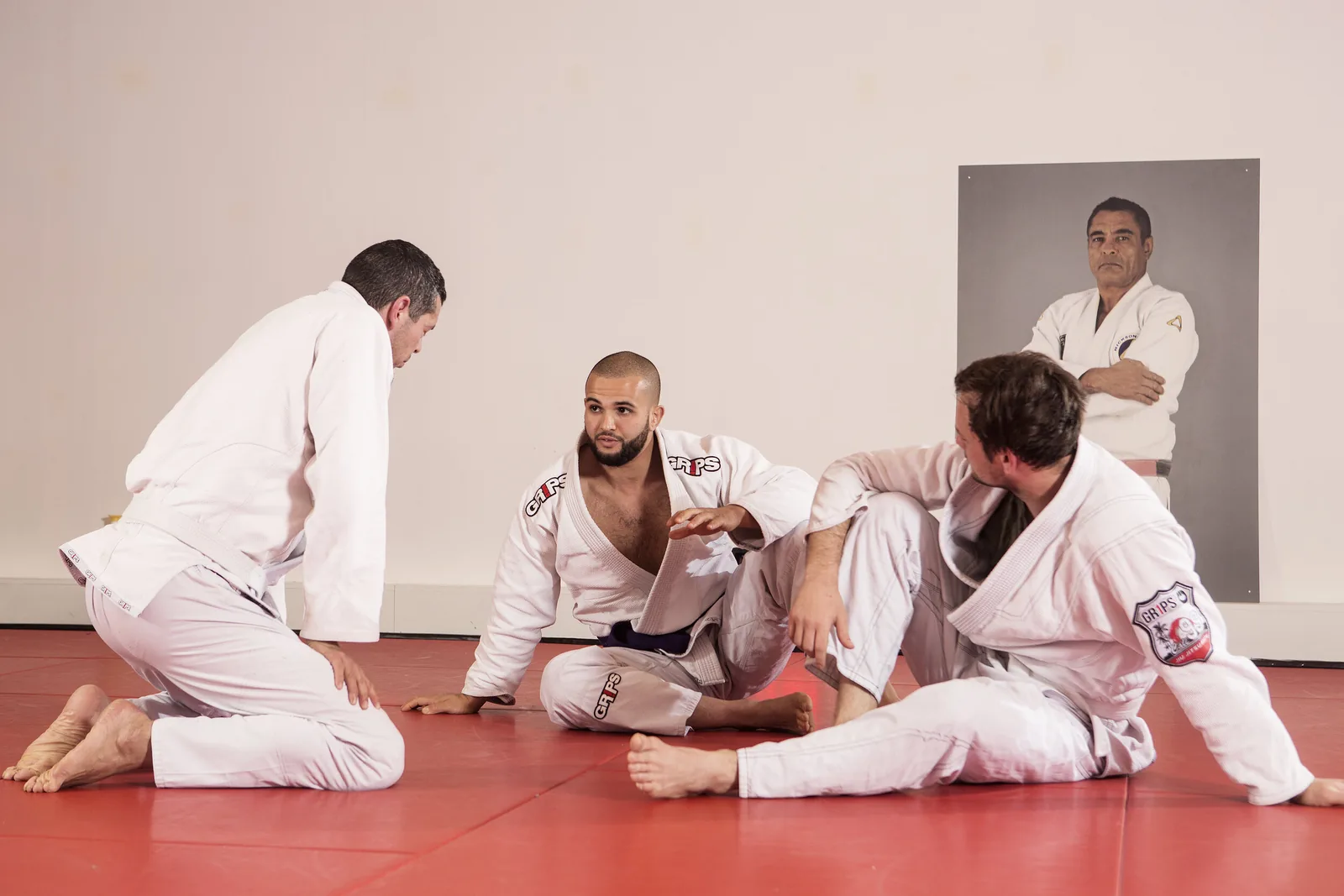
It is therefore advisable to train a lot with different body types, skill levels and styles.
It helps you develop a versatile Jiu-Jitsu game.
3: Cardio:
You can run or cross-fit all you want, but mat time is where the gains are to be made.
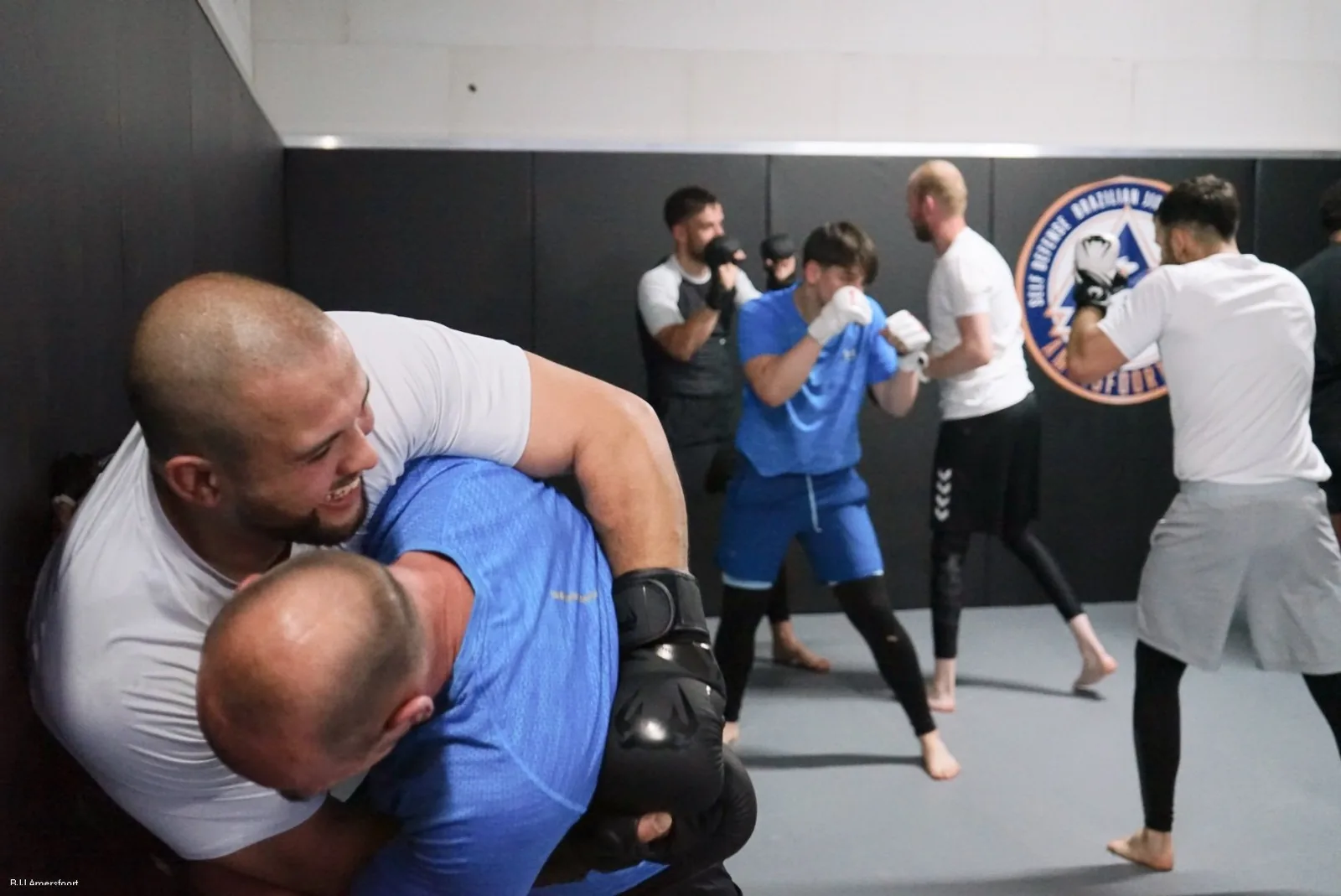
Sparring is cardio in itself.
4 Visualization:
BJJ training doesn't stop when you step off the mat.
It stops when you decide not to think or visualize about it anymore.
A tip I always give my Brazilian Jiu-Jitsu Amersfoort students:
You can only be on the mat for a few hours a day.
You can also only do so many repetitions in one class.
But in your head, you can repeat and think endlessly!
5 Sport-specific BJJ exercises
In Jiu-Jitsu, you have six ground positions and several sub-positions.
Sport-specific exercises are a good way to learn how to transition from one to another without wasting too much energy.
6 Master the basics
Don't be fooled by spectacular techniques you see on the internet.
Tricks don't win against the basics.
That's why at BJJ Amersfoort, we mainly focus on techniques used at the highest level.
What falls under basics?
Posture, balance, hand/grip fighting
7 Don't worry about tapping in training
Focusing on winning in training, instead of learning, is a common mistake.
BJJ training should be aimed at learning and implementing new skills.
You only need to win when it matters.
So in a competition.
Nobody cares that you were able to make Jan, Mo, or Renate tap in training.
Sparring should be a learning moment.
It is also a moment to sharpen your techniques, usually on people who are less skilled than you.
Don't be afraid to give something away and then tap.
When sparring, you test things you will use in competitions or self-defense scenarios.
8 Work on your weaknesses
This connects to our last point. You won't improve if you don't address your weaknesses. Most sparring partners will have no problem accommodating you. For example, if you are always stuck in the bottom half guard position, tell your sparring partner so you can start from there when you roll. You'll be sweeping opponents from there in no time.
9 Study the greats
Thanks to the internet, it's easier than ever to learn from the best. Watch videos of top competitors and pay attention to the techniques that work best for them so you can add them to your arsenal.
10 Compete
A BJJ competitor with his hand raised
BJJ tournaments are a great way to perfect your techniques, even if you don't plan to compete professionally. You can compete against equally skilled BJJ practitioners of similar size with whom you've never trained before. It's a richer experience than always sparring with the same people.
This article was originally published in Dutch. Read the Dutch original.