In this blog, we will explain everything you need to know about the two styles within Brazilian Jiu Jitsu (BJJ): Gi and No Gi.
Brazilian Jiu Jitsu has come a long way since Mitsuyo Maeda adapted it from traditional Japanese Jiu Jitsu in Brazil. In the past, Jiu Jitsu was only practiced in a gi or 'kimono', which initially confused Brazilian spectators who were used to watching fights in speedos (Vale Tudo).
Now that BJJ has earned its place as one of the most popular martial arts within Mixed Martial Arts (MMA), Jiu Jitsu without the gi, also known as "No Gi", has also grown in popularity. But back to the question of Gi vs No Gi. This is a discussion that has been going on in the BJJ community for years. There is no definitive answer as to which is better.
The best athletes in Brazilian Jiu Jitsu BJJ should be proficient in both Gi and No Gi. This is because Jiu Jitsu is ultimately about controlling the opponent, not about what clothes you are wearing.
Gi and No Gi can each have unique advantages. In some cases, No Gi Jiu Jitsu is more relevant for those learning BJJ exclusively for MMA, or for those who only want to compete in No Gi. Read on in the blog.
What is the difference between Gi and No Gi Jiu Jitsu?
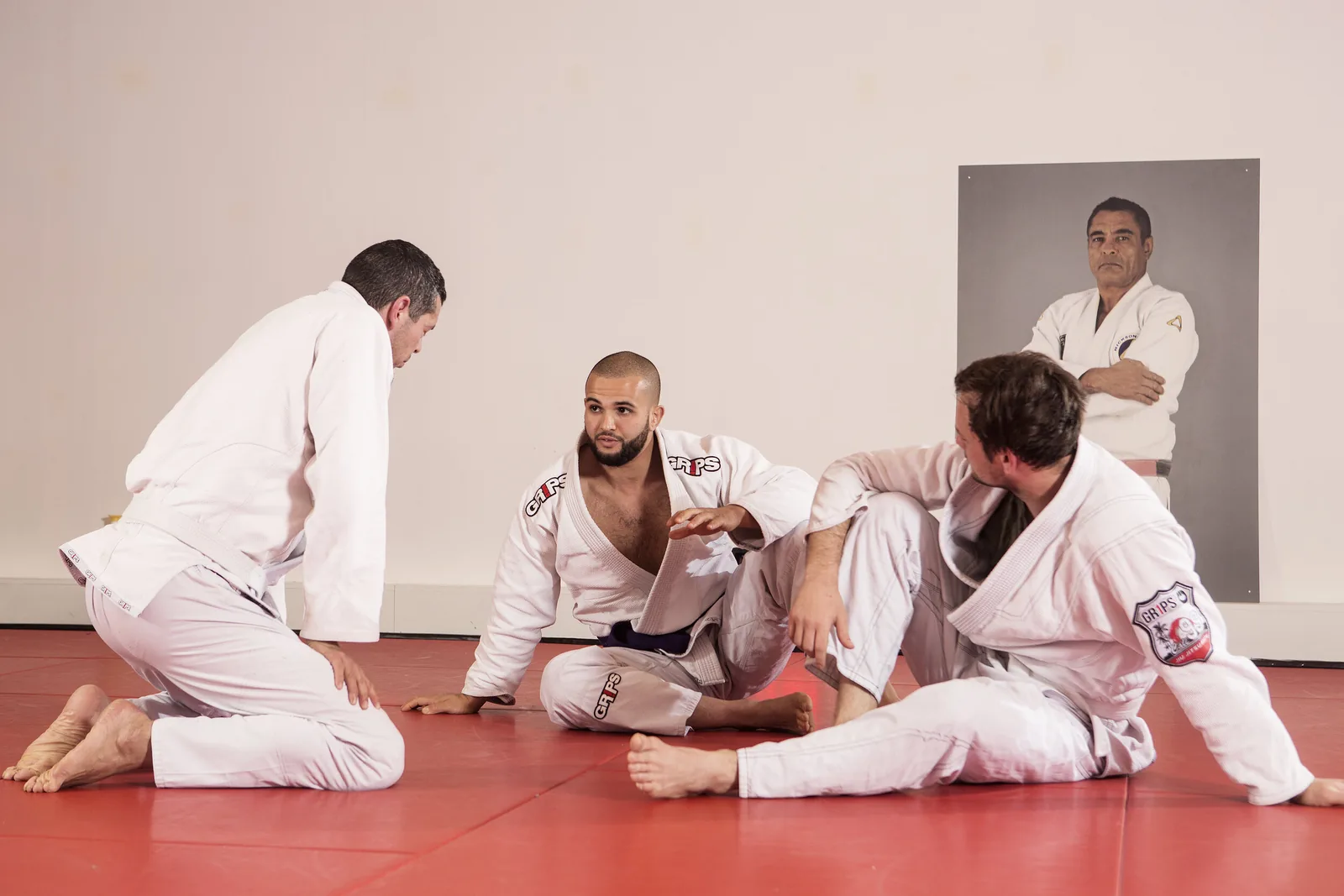
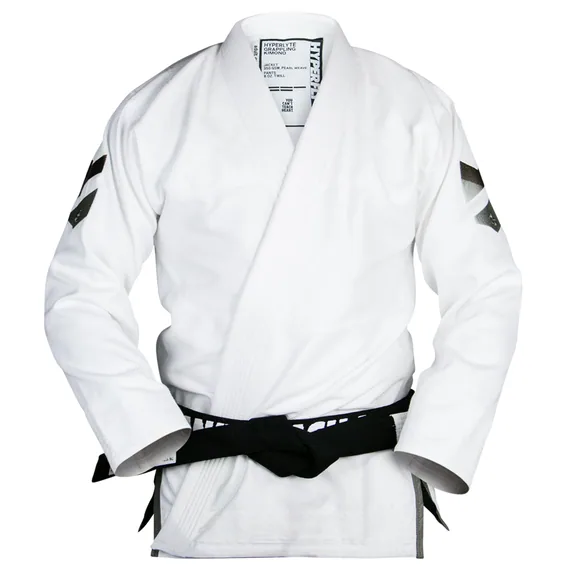
The “big” difference between Gi and No Gi Jiu Jitsu is the clothing. Traditionally, in BJJ you wear a cotton gi or 'kimono', based on the traditional kimonos worn in Japanese martial arts such as Judo since the 1920s. A Gi is a cotton jacket with a thick collar, drawstring pants, and a cotton belt colored to indicate your rank. You have ranks from white to black.
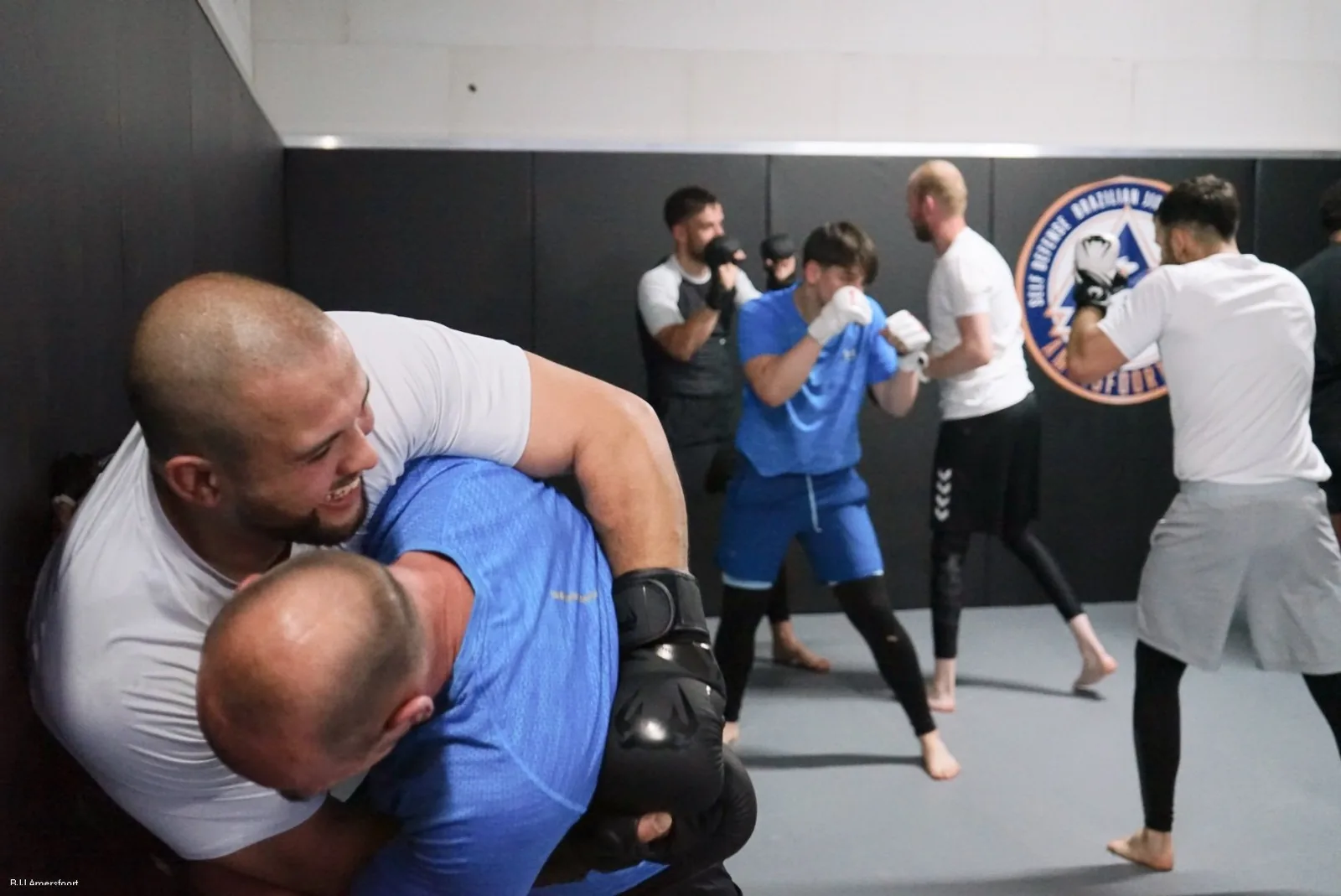
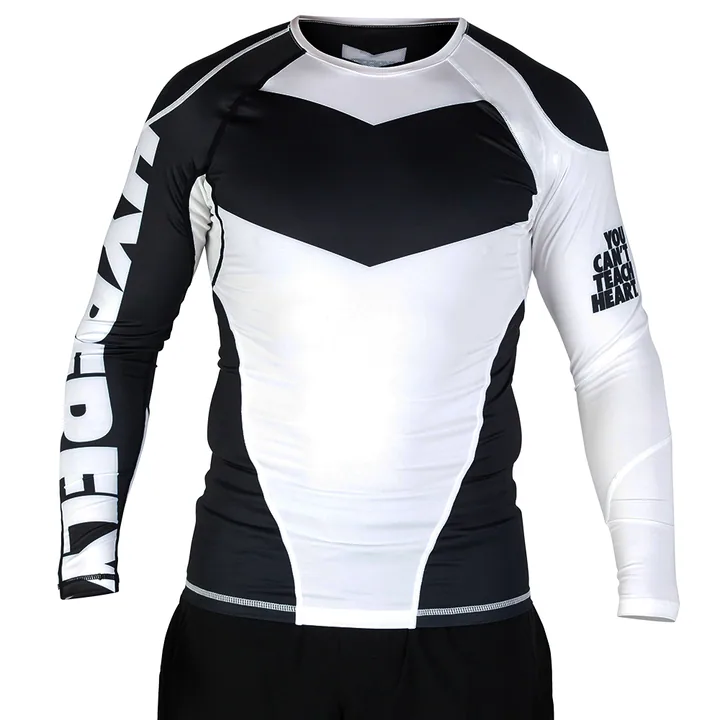
In No Gi, you wear a 'rashguard' and board shorts similar to what you wear on a beach or at a swimming pool. You can also wear sports leggings under your shorts (spats). No Gi clothing is made of stretchy elastic materials such as polyester. Shorts and a t-shirt suffice.
How does the change of clothing affect the style of Jiu Jitsu?
When you practice Jiu Jitsu in a gi, you can grab and use your gi and your opponent's gi, including the collar, lapels, pants, and sleeves in your techniques. In No Gi, you have less to hold onto and are not allowed to grab your opponent's clothing during your throws or takedowns. Instead, you use modified techniques from Judo and wrestling to unbalance someone. This changes the style and pace of a Jiu Jitsu match.
In No Gi, there is virtually no friction, while a Gi provides a lot of friction, especially when you start sweating. This slows down the process of attacking or defending, forcing you to wait for the right moment. With a Gi, you have to be tactical with your movements, which is why BJJ is also called the "human chess game". In No Gi, you learn to use body position to immobilize and submit opponents.
Gi vs No Gi BJJ competitions

Are there rule differences between Gi and No Gi Jiu Jitsu? Yes, in Gi you can use the clothing and in No Gi you cannot. The largest organizers of BJJ competitions with the Gi worldwide are the International Brazilian Jiu Jitsu Federation (IBJJF). Most IBJJF competitions have both Gi and No Gi divisions. In IBJJF, there are more rules in No Gi regarding leg locks.
The ADCC World Submission Fighting Championships take place every year and have events all over the world. In this rule set, the Gi is optional and heel hooks are allowed, meaning leg locks are used more often.
Is Gi or No Gi better for beginners?
This is a difficult question to answer without knowing your goals in Jiu Jitsu. At BJJ Amersfoort, we offer classes in both styles. We believe it is important to train regularly in both styles to become competent in both.
Is Gi or No Gi better for self-defense?
There are different opinions on this. Jiu Jitsu was originally taught with the Gi, specifically for self-defense. Some think the Gi is unrealistic in self-defense situations, but in the Netherlands, most people wear a jacket for a large part of the year. What you can do with a Gi, you can also do with a jacket.
Is Gi or No Gi better for MMA?
Many Gi-specific techniques cannot be translated well into MMA. The time you spend on these can be better used for practicing other aspects of MMA, such as wrestling, boxing, and Muay Thai. The Gi is for defense skills; you learn that exploding out of difficult situations is not always the answer.
Advantages and disadvantages
Advantages of Gi:
More sweeps and submissions are possible
Helps build better defense
Disadvantages of Gi:
Due to friction, you can often get away with sloppy submissions
Advantages of No Gi:
You develop more attack and body positioning
More relevant for MMA
Disadvantages of No Gi:
Fewer defensive skills due to less grip and friction
In short, train both! This is of course possible at Amersfoort BJJ.
Conclusion
There is no definitive answer to the question of which style is better, Gi or No Gi. Both styles have their unique advantages, and it is important to become competent in both. Whether you train for self-defense, MMA, or just to stay fit, Brazilian Jiu Jitsu offers a great way to develop and improve your skills. At BJJ Amersfoort, we offer classes in both Gi and No Gi, so you can get the best of both worlds.
Try Brazilian Jiu Jitsu for free for 7 days!
Are you curious about both Gi and No Gi Jiu Jitsu? Do you want to experience the benefits of both styles yourself? At BJJ Amersfoort, we offer a free 7-day trial period. During this period, you can participate in all our classes and discover which style suits you best.
Sign up today for your free 7-day trial period and start your journey into the world of Brazilian Jiu Jitsu!
Start your free trial period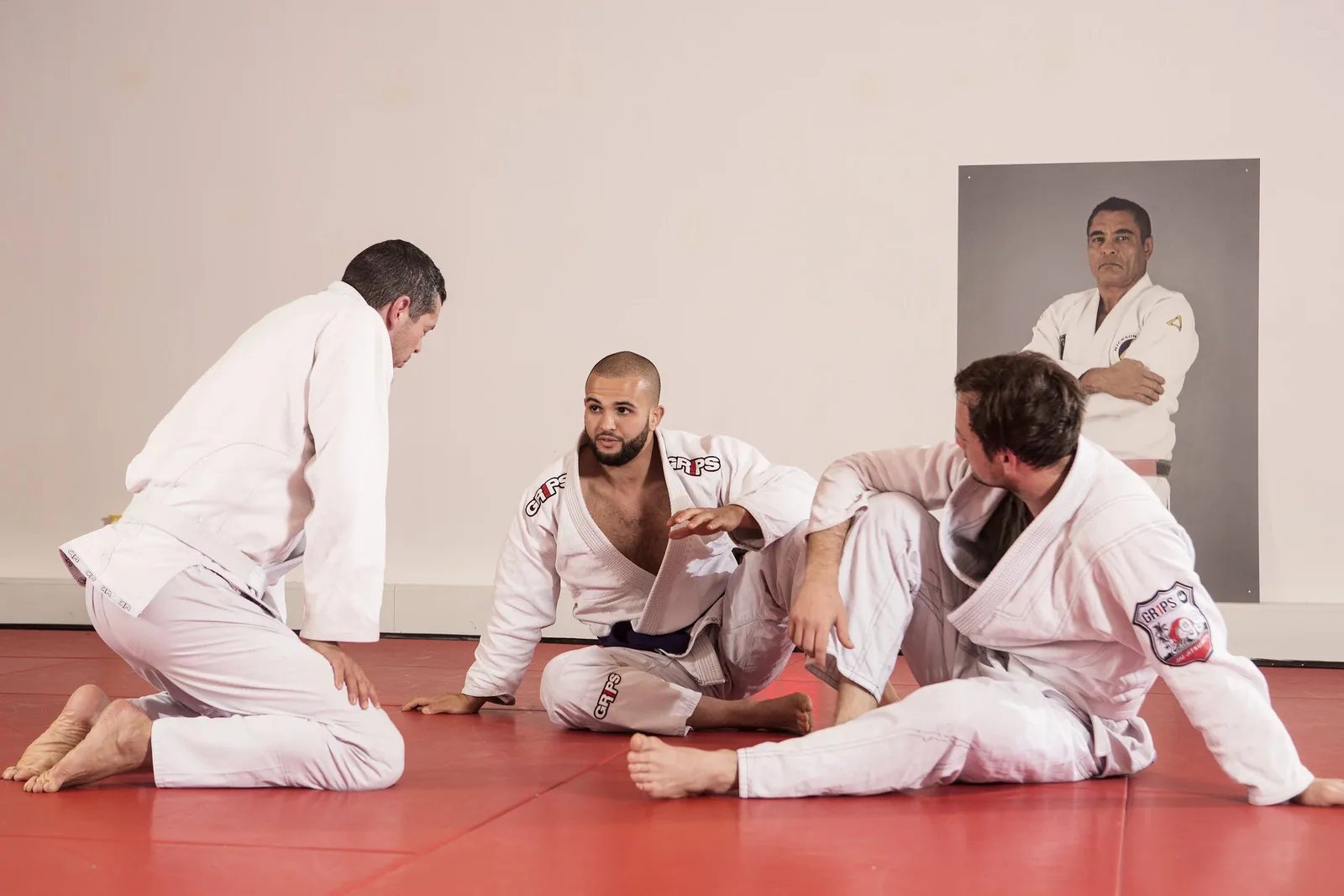
Choose the best Brazilian Jiu-Jitsu (BJJ) school with the help of this guide, whether you are a beginner or experienced. Learn about gi and no-gi training, find local BJJ classes and discover what to look for when selecting a school for valuable insights.
Read more → Timestamp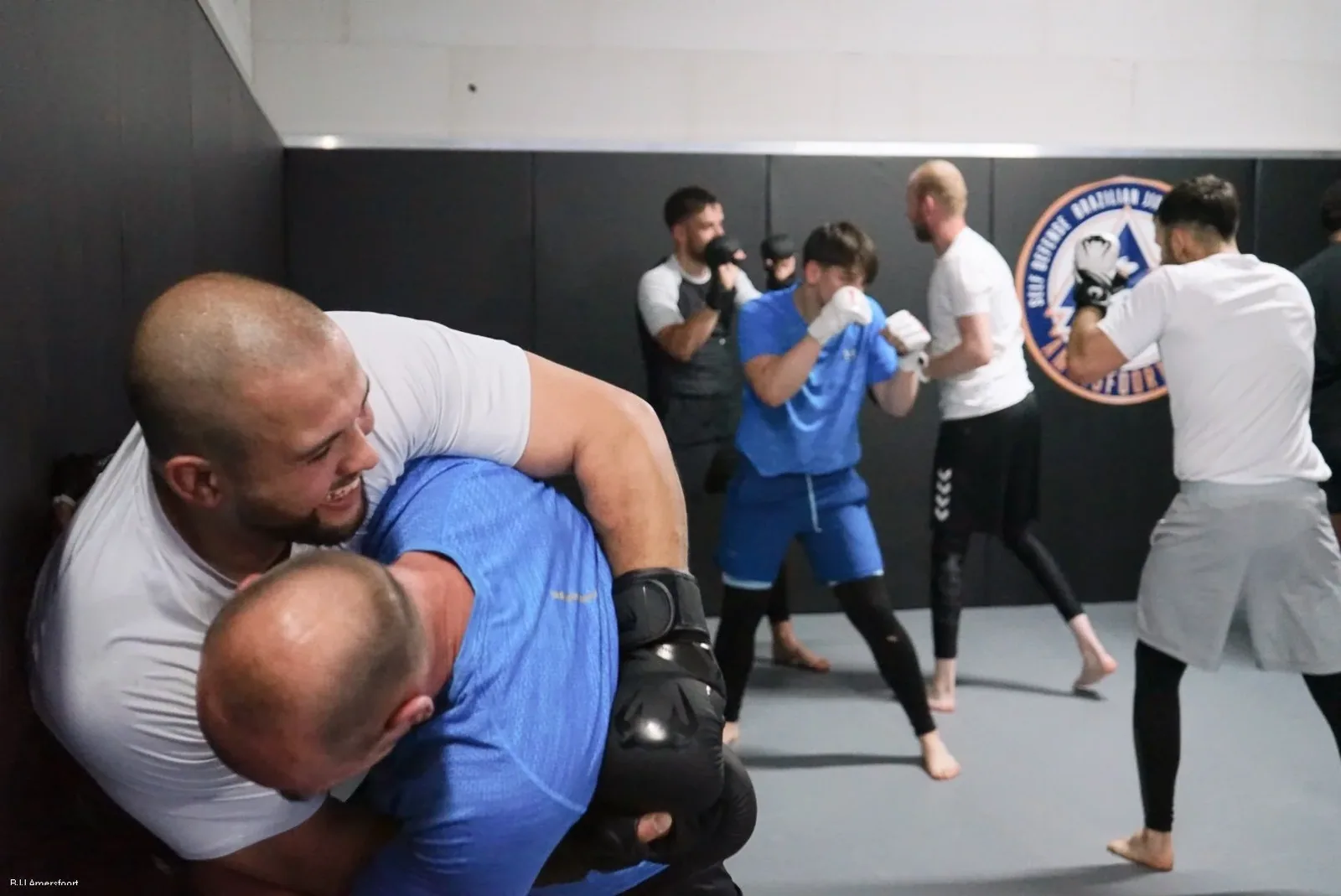
At Amersfoort BJJ, we offer top-quality MMA classes that go beyond just physical training. Discover the benefits of our comprehensive training in Brazilian Jiu Jitsu (BJJ) and other martial arts techniques.
Read more → Timestamp
Discover why Mixed Martial Arts (MMA) is the ultimate combat sport. Learn about the different fighting styles, training, and rules that make MMA unique. Experience it yourself at Amersfoort BJJ, where versatile MMA training is offered.
Read more → TimestampThis article was originally published in Dutch. Read the Dutch original.