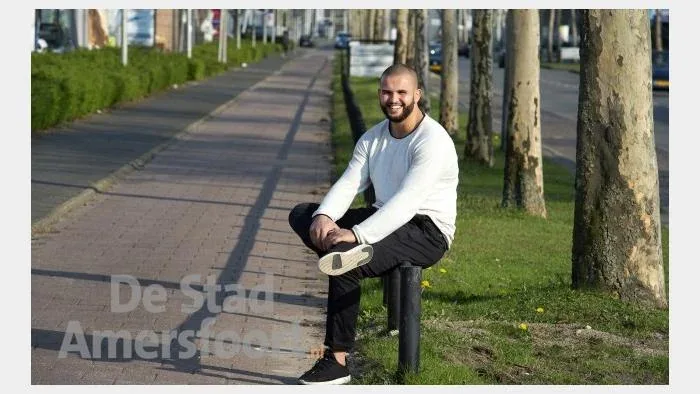
INTERVIEW | Abdel Ziamari narrowly survived a horrific accident. He was supposed to spend the rest of his life in a wheelchair. Now, he is an expert in Brazilian Jiu-Jitsu and the owner of a gym. A matter of tough survival instinct but also: the inspiration of this martial art.
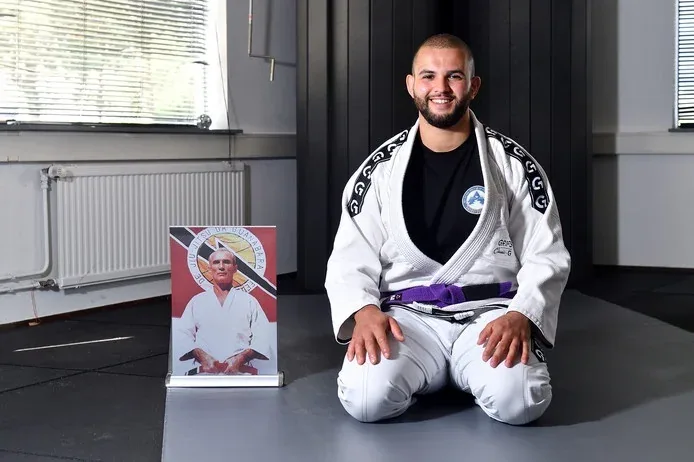
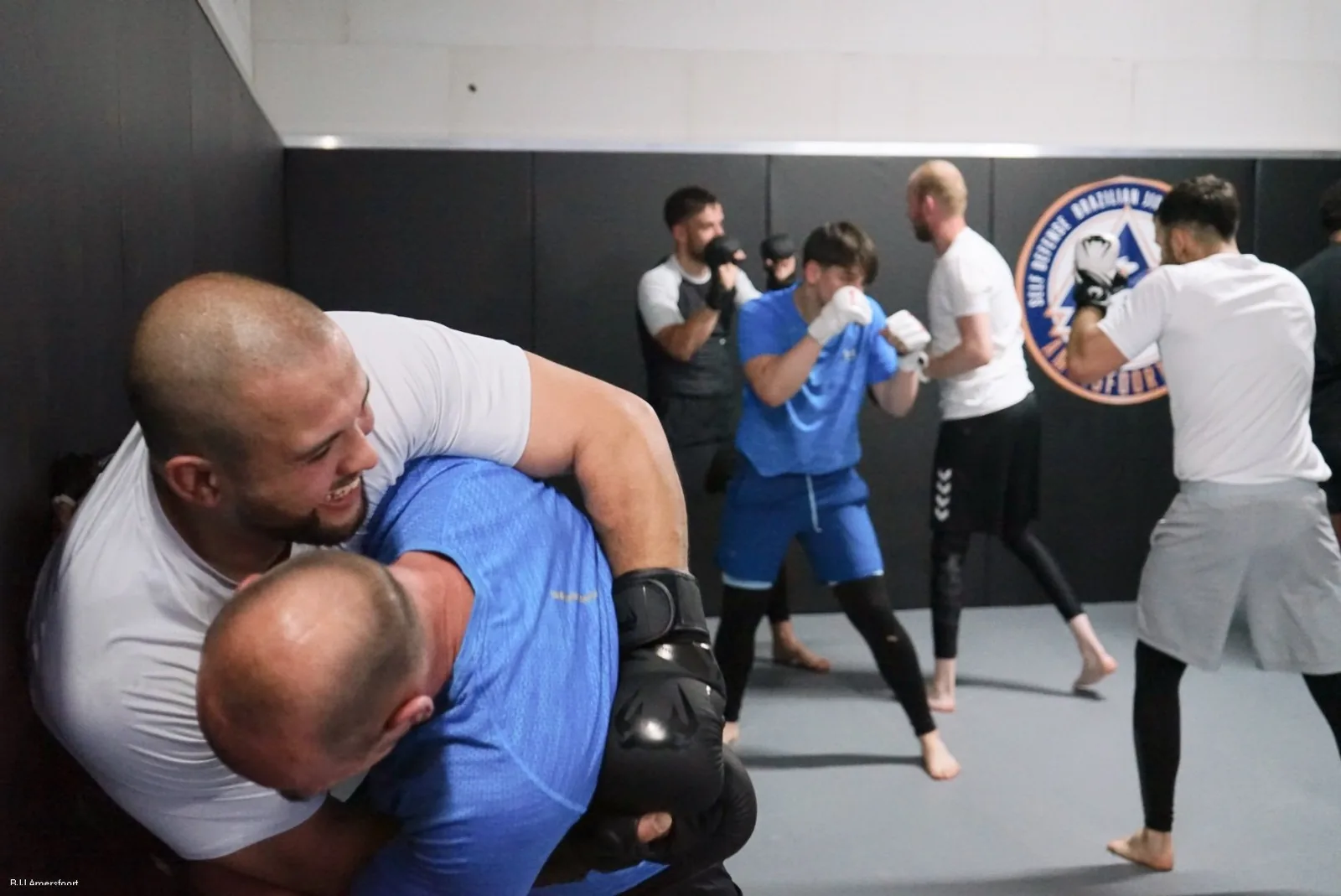
Abdel Ziamari (29) is doing well. Thanks to hard training, the Amersfoorter has achieved a high rank in his favorite martial art: Brazilian Jiu-Jitsu. He opened his own gym in May. By early July, interest was already so significant that he could move to a larger, new location.
Remarkable for someone who was constantly told he would live like a vegetable. He would only be able to move around with a wheelchair or walker. Doctors considered it unlikely that he would ever be able to breathe independently again.
The troubles began on November 10, 2006. That day, 16-year-old Abdel was riding his scooter from the secondary school, the ROC on Zangvogelweg, to his uncle's car repair shop, where he had been doing odd jobs for years.
"On Nijverheidsweg-Noord, a van came from the left. The driver was on the phone and turned off without paying attention or signaling. He hit my rear wheel. I was launched and landed 6 meters away. At a height of 2 meters, I crashed into a pole, with literally my toes against my nose. Then I slammed onto the ground. My helmet was split in half."
Multi-trauma
A little later, in the hospital, the injuries turned out to be enormous. "All internal organs were perforated. Doctors spoke of a 'multi-trauma'. I remained more or less conscious for the first three days. Then something ruptured in my intestines, waste was released, and I could contract a fatal infection. They then kept me in an artificial coma so that I would at least stay alive. Because my fever rose to 42 degrees Celsius, I was given a special blanket with air conditioning to bring that temperature down."
My intestines were in such bad shape that they considered giving me plastic intestines.
Abdel Ziamari
The artificial coma lasted two months. This was followed by a seemingly endless series of procedures. "My intestines were in such bad shape that they considered giving me plastic intestines. I would then have to spend the rest of my life on an IV. My spleen and half of my liver had to be removed. Of 6 meters of intestine, only 3 remain. Nowadays, I pay close attention to what I eat: always organic."
He never drank alcohol and has maintained that practice.
Ultimately, he underwent exactly 33 operations, on average once a week. "That was always under general anesthesia. I was never nauseous, to everyone's surprise; they had never experienced that in the hospital with someone under those circumstances."
Spring roll
The operations were accompanied by many complications. "On my 17th birthday, some friends came over. A doctor had said I could carefully start eating something; I had been on tube feeding all that time. The friends gave me a spring roll. The vegetables from it literally came out through my stomach, my intestines were no longer accustomed to solid food. Things like that would happen a thousand more times."
But Abdel was 'a tough one', as he himself observes. "I felt that survival instinct. I had no choice, I had to grow up as quickly as possible. When specialists again said I couldn't do something, I thought: I CAN do that!"
He lived for four years in rehabilitation clinic De Hoogstraat in Utrecht, followed by two years in a clinic for people with acquired brain injury in Den Dolder. His stay in the second institution became a nightmare. "I was in a locked ward under the same roof as forensic psychiatric patients. I had no idea why I was there, and nothing was really done for me. Except for an appointment with the neurologist once a week."
It became clear, however, that the traumas of the accident and its aftermath were difficult to process. His youth had been taken from him, and this began to take its toll. Abdel was hypersensitive to light and sound and felt depressed. "I just wandered through those corridors. Nobody listened to me. What was I doing there?"
Boxing
He was finally allowed to go home and entered various 'programs' that didn't help him progress at all. On his own initiative, he started boxing, something specialists had advised against due to his fragile constitution. Nevertheless, he did it, and it turned out to be a good outlet. "But I wanted something else. I looked into weightlifting for a while."
The breakthrough came on a day that was perhaps just as decisive as that afternoon when he was thrown into the air by that van. It was 2014, and Abdel was surfing YouTube. "At the bottom of the screen, I saw: 'choke' – so, 'strangulation'. I clicked on it and saw a video of Rickson Gracie. He turned out to be something like the Michael Jordan of Brazilian Jiu-Jitsu, or BJJ."
Choke
It is a martial art in which you neutralize your opponent by means of a choke. That sounds gruesome, but it isn't, Abdel patiently explains. "You cut off the blood supply to the neck for 5 seconds. This makes your opponent 'lights out', but they are fully recovered after 8 seconds. BJJ is much more subtle than most martial arts, which revolve around punching and kicking."
I find Brazilian Jiu-Jitsu superior to all other martial arts.
He concludes: "Intelligence trumps brute force. I have doctors and lawyers among my students. I find Brazilian Jiu-Jitsu superior to all other martial arts."
The sport was invented by Hélio Gracie, Rickson's father. "A sickly and fragile man who figured out how to win against people who are bigger and stronger."
Before the choke, you first have to take your opponent to the ground, which involves techniques from judo and wrestling. "On the ground, people are easier to subdue. I always make a comparison with a bull. It is very strong, but most of its power is in its legs. Put a bull on its back and it can do very little."
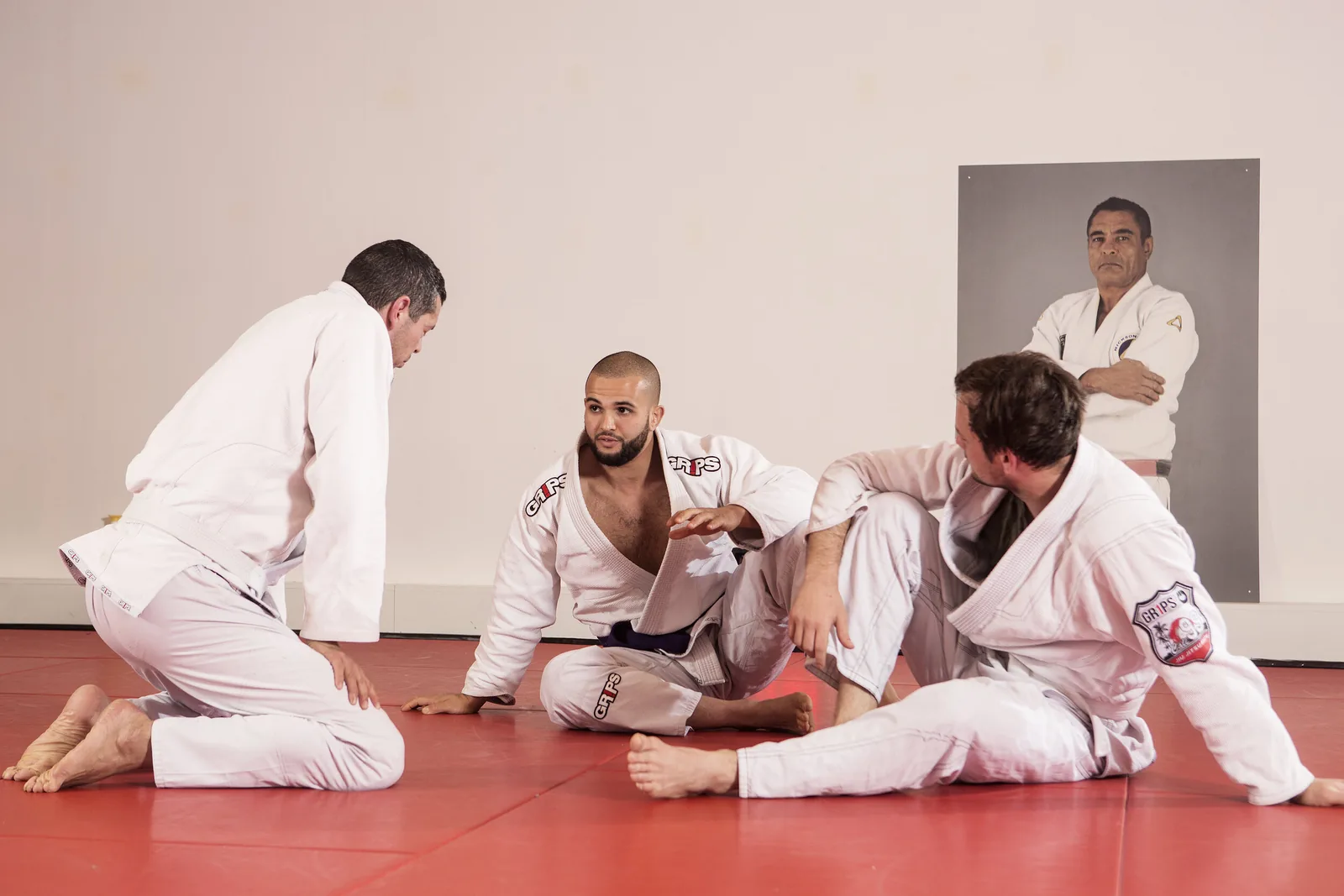
For years, Abdel traveled to Amsterdam six times a week, where he took lessons from Raoul Hiwat, a student of Rickson Gracie. He also went to Los Angeles for lessons with Gracie himself. He now has a purple belt, which is a high honor.
Therapy
The martial art is more than just a sport for him. "It has made me more self-confident. I find a yoga-like relaxation in it. Training has been a kind of therapy for me. In the first lessons, I was truly euphoric! I was concentrated for two hours and didn't have a second to think about my misery. It was very primal, almost primitive. The body took over."
Abdel hopes that a kind of 'community' of BJJ practitioners will emerge in Amersfoort. "In Amsterdam, about 160 people now train. I have twenty students here."
BJJ is a great solution for people of all ages. "I give women self-confidence. I can get young people off the streets. In collaboration with the welfare umbrella organization Indebuurt033, I will give courses to students against bullying. How do you deal with that bullying? That bully may be bigger and more muscular, but you can tackle him. Just think of a bull lying on its back; it is defenseless."
This article was originally published in Dutch. Read the Dutch original.